Feedburner

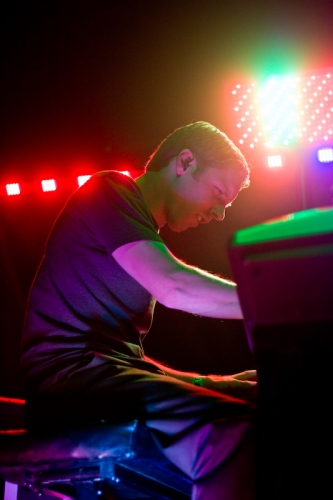
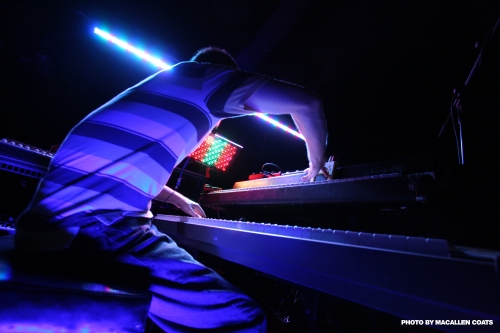
Jeff Bujak is a Northampton, MA based keyboardist/producer/composer who has designed a new style of intelligent dance music (IDM) that dives deep into the waters of complex electronica and he’s carving a fresh path in the live-music scene one performance at a time.


Though, if you ask a Jeff Bujak fan to describe his music, a blank face followed by a smile would prove to be a common trial answer, then usually words like 'dirty' and 'epic' start pouring out.  His music falls into a large pool of electronica dance genres, lands on one and leaps to the next while he wails away on his keyboards to create something truly moving, smart and original.

Bujak2

Interview by Maisie Leach
HGMN: Where are you from?

JB: Well I live in North Hampton Massachusetts and grew up in Syracuse New York. But yeah, I live in Western Massachusetts now.

HGMN: Well tell me about yourself

JB: Personally or musically? They are 2 different worlds.

HGMN: just be open...it'll be better that way.

JB: The past few years' music has been my life. I'm pretty much on the road as much as I am at home.  My wife's' at home...she has a pastry chef job. She does cakes and wedding cakes. So she keeps herself occupied.  As far as me, you know being on the road and music is my life. Meeting new people and playing music is pretty much all I do right now.  Now that I'm stepping out of the business aspect of this and letting others take care of me in that way...I'm able to concentrate on what I really want to do, playing music and less of the business aspect of it. Getting back into my normal life and being myself.

HGMN: So you are starting to do more marketing?

JB: Yeah, my team is doing the marketing. In the past I represented myself and did all of my own work. You know, being a solo artist there's just me doing all this stuff. So, this was for about 3 years and then I started bringing on a manager and I took on a couple more people to help me out. Now, it's interesting...3 or 4 years of just doing the business side of things, I kind of forgot who I was. I realized after doing all of that playing music is really what I want to do instead of trying to schmooze and work out deals and stuff like that. So as far as me, I'm just an easy going, music lover that's pretty much it. I absolutely love music from the bottom to the top, I love making it. I'm a very selfish music lover, there are only a handful of bands that I can actually put in a cd and really listen to. I try to give as many bands as I can a chance. But I have a very narrow market of what I actually listen to.

HGMN: You're picky...You're like a wine connoisseur.

JB: I'm very picky. That's kind of why I make my own music of what I want to hear.

HGMN: One thing about music is that you get to pick whatever the next move is and it can go in any direction. And it can influence people so much.

JB: Oh, without a doubt. And sometimes you don't even try for that. I don't really have songs. I just have tracks that I play...but I have live versions, studio versions. I have a lot of different versions of all my tracks. But um, a lot of times with my live thing I'm like "Okay my main goal is just to make people dance." Then I start writing a song and sometimes it will turn into something completely different and I'll just let it go...let the flow go and see what happens with it. I'll start with one thing, try for one thing and it'll end up in a different area.

HGMN: What is your process like?

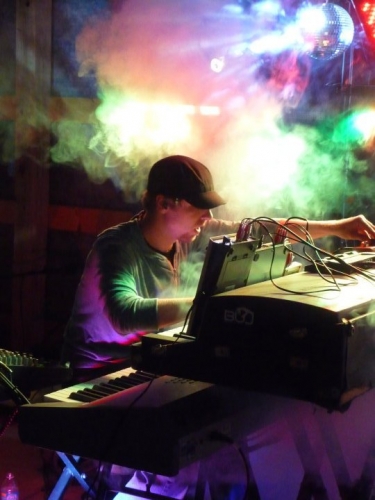
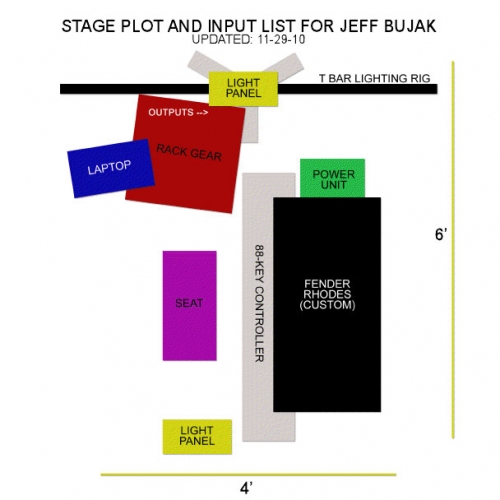
JB: It's very random. I am pretty much free. I have 3 sections of my career. One is a live performance. That's when I have all my keyboards, my mixers, all my gear and all my loopers and computers. I pretty much want to make it a dance party. When I'm on stage I want to make people to at least move or at least be engaged in what's going on, upbeat and full. I make the music as full and thick as possible. I make it sound like a full band. But in the studio...it's where everything starts. It's where I create all my beats and everything. And I'll start out a song very simple. I'll just write a song and record it in the studio and edit and add intricate little things. And then I bring it to a stage and start adding loops and certain things so the songs are kind of written as I go. I'll sit down and I'll start writing a song or writing a process of a song and...by the end...I... I don't plan much.

Bujak1HGMN: Your plan vanishes...

JB: Yeah.

HGMN: But then it's goes in a good direction.

JB: And if it doesn't I start over and do something else. Being alone, I'm able to do whatever I want. This can be good, it can be bad. I don't have any other influences and in a way I don't want anybody else saying "Hey, let's try this or that." I just want to do what I do. And if I come up with an idea and I do it on stage and I notice that people aren't really into it, I just don't do it again. So in the studio I do what I want to do, and on stage I kinda do what I want to do but I have to incorporate the audience into it. Like, "You really wana dance? Okay I'll give you something" Or if they're the audience that's sitting there watching me, I'll give them something to watch. I'll cater to them...but still stay within my own realm of what I want to do. But my studio stuff is exactly what I want to do. And then I have a remix career where I take other songs and I do mixes of them and I throw them into a new original that I write. So I take other peoples songs and I rewrite them. I'll take 3 or 4 different artists and mix them.

HGMN: Who are some of your favorites?

JB: A lot of hip hop artists right now. I mean there's southern hip hop like T.I. and people like that but then there's early 90's hip hop. I really like Wu-Tang, a lot of Nas, Common...

HGMN: Me too! I like Jurassic 5

JB: Yeah, Jurassic 5 exactly. I actually sample J5. Hip hop is very easy to remix because it's not necessarily based on melody. Which is what I like to create is the melody part. Just take rhymes and you can stretch em out and make them match my own beat. That's what I do. I take what other people have done and put my own spin on it. This is a smaller section of my career...I just let people download it. I don't want to sell it because I'm using other peoples' music...it gets complicated.

HGMN: Do you ever run into any legal issues?

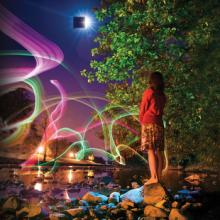
JB: Not really because labels aren't going after people who are using samples because labels are not failing but you know, big labels just aren't doing as well as they used to and they don't have the full on power of going after an artist that's potentially doing better than the actual recording artists. You know, like Girl Talk, he's a mash artist. And he sells it. And not one label has gone after him because he's giving those songs life again. And some people might go out and buy those albums again. So yes it is illegal, it really is...to rerecord something and sell it is illegal but they aren't going to come after you. So, I just don't want to get into that world. There are a lot of musicians who say "No this is my music. Please don't use it for your own gain." So I try not to make money off of it. But there are people who enjoy it. But my studio original stuff is my main goal and then my live show is becoming quite big. I'm getting LED hoopers and a lot of lights and incorporating a lot of different things into it, making it more like a circus. Fire spinners...I use that a lot in the Northeast.

HGMN: Are you the father of this type of music? Were there other people doing it before you?

JB: Well there are different aspects of what I'm doing. Like with the silent disco I have headphones. That's been done with Dj's and stuff but it's never been done at a live function so as far as I know I'm the only person using it as a live thing through a laptop. It's radio transmission so it gets very technical. You have to specifically mix it and compress it in a certain way to send it out. It's different from a live band...you can't have any external noise at all. It all has to be through a mixing board. So my setup is appropriate for that and works for that so I just happened to be able to do it. So I guess I am like the first to kind of try this but maybe others have done it. I don't know really. It's hard to say.

HGMN: I came to your show Thursday night and it was kind of a weird experience for me. I was with my boyfriend and he doesn't even like electronic music and he was getting down. It was funny. But then I felt a little weird because I couldn't feel it (the beat) you know what I mean?

Bujak3

JB: Yeah, it's just your ears. And for people who don't like to be judged it can be a downside because people on the outside don't know what you are hearing. And they are looking at you like, "what?" But then you look around at the others listening and it's like, "I get it". It's a whole different world and when you take off your headphones and look around, it's a big jump from one to the other. It's really interesting. Obviously I've never been out in the crowd because I'm playing but I'm sure it's strange.

HGMN: You need to see what it's like to be in your crowds shoes.

JB: Maybe tonight if I get a loop going or something I can jump out and see that. But the silent disco thing is something I don't do as much as my loud set. I do festivals and I do like a "normal set" where I go on stage and then I'll do a silent set and it's 2 different things. There isn't that thumping to dance to. Some people like it better than others.

HGMN: How did you start doing this?

JB: Well, um, since I was 23 years old I've been on the road touring. I'm 32 now. I've been in bands touring around the whole country doing jam band stuff and other things as a keyboardist. Really long story short, I joined a band, toured around the country a lot and started learning the craft. Taking over positions in the band so we could get more exposure. I'd be like, "well, we don't need a manager anymore. I'll take over that". So I learned all the aspects and I started making connections and it got to a point where the bands I was in were kind of settling down and I started beefing up my gear and thought I'd try something solo. It started out really basic. Slow beats and just piano. It was going to be a very ambient thing. Over 4 years it's just turned into this. A heavier electronic thing. And in 4 years I don't know what I'll be doing either. It's evolution. When I get bored I'm fine...I just try something new. So people who saw me a year ago say that it's completely different.

HGMN: And do you provide the head phones and all the gear needed?

JB: Those are all my headphones. I travel with all this stuff and it's very difficult. It's a production. There's 2 main goals: #1 is getting all the headphones back. Since they're wireless they disappear very quickly. You have to treat people like cattle (laughs) You have to keep them in.

HGMN: Yeah, I noticed the tape.

JB: And that's minimal. Like that's all we could do. I usually like fencing just because those headphones work for a while and people are curious so they, like, walk to the parking lot. Or they get in a conversation and go to someone's campsite and get talking and end up putting them down and forgetting about them. It's rare someone will sneak them off on purpose. And then goal #2 is setting it up and getting people comfortable with it. Getting people to understand what's happening. A lot of people have questions and you just have to say "Just, here. Put these on and listen". People are always curious because they are wireless headphones.

HGMN: You should get Dr. Dre to sponsor you!Bujak4

JB: Yup, with "Beats." And you know there are companies that sell thousands of these things and they do festivals out in the fields. And a lot of them have 2 channels. So you can go back and forth from 2 DJ's on stage...one on channel A and one on channel B. And there's ones that have 6. So you have 6 DJ's, 2000 people and you have, like, a dub step DJ, a trance DJ, a house DJ and you get all these people dancing in one place to 6 different things. It's far out. And you can tell the people that are really getting into it. You are like "What are they doing? What are they flipping through? What are they dancing to?" And then you turn the channel and figure out "That's it!" just from the way they are dancing. You see this girl trancing out and you can go to that. It's really fun.

HGMN: That's a really good idea. I want to go to something like that. That's a whole different experience.

JB: Yeah, and a lot of people have that judgment. It's not to replace a PA. A lot of people will use it because you can't have loud PA at night so they do headphones. It's not a replacement. It's a whole different experience. And there are some silent discos where they just have subwoofers. They're not doing it to keep the sound down; they're just doing it for the experience. They'll run subwoofers across so on the outside you just hear low humming and occasionally a beat. So when you put it on you can hear it and feel it.

HGMN: So hip hop is your favorite?

JB: To remix, yes. To listen to it's really heavy metal. Like Swedish heavy metal, really intricate. It's metal that's not easy to bob to. It's stuff that you're listening for. Everything's written out. It's like classical music. I'm a classical piano player, so. Europe and Scandinavia love the real intricate stuff. Other than that, I have respect for musicianship. I like slower, I like darker. A lot of electronic guys like Deadmau5.

HGMN: Have you listened to Porcupine Tree?

JB: Oh yeah, I opened up for them 2 years ago in New Jersey! It was an awesome show. Yes! I lived on one of their albums for like a year. That whole Prague world. I love that style of music.

HGMN: What do you live by?

JB: I just believe in morality and being the best person you can be. I have a drive to succeed. I don't feel like this is a competition at all. In the music industry there is a lot of competition and I can't help but feel like, okay, I need to do better than that other band and their draw because I want to be bigger. It's a selfish thing. So I just try to do things in the most positive way. I'm in no position for entitlement. I don't believe I'm entitled to anything. I'm just trying to do something good here and make people feel good about the money they spent coming in. I've been working 11 years for this music thing. This is the time when I really need to make it happen. And it's starting to definitely happen. So I'm walking a thin line and making sure that I don't get a negative backlash. I've seen it ruin careers. 

HGMN: What are you most looking forward to?

JB: Being able to present the show I want to present. And just not being worried about shows anymore. Like worrying if people are going to show up. That's the biggest stress for a musician. I'm looking forward to showing up at a show and not being concerned. And knowing that there are going to be a lot of people there who will enjoy it. I make my best music when I'm not stressed out. I have to close my eyes and cancel out everything. I'm constantly thinking ahead at what I'm going to play next. But at the same time I'm constantly looking at that front row. If I see someone turned around. I know that somehow I lost their attention. So what am I going to do to make them turn back around? That's a game in itself. It's really fun.

HGMN: You have a good fan base back home?

JB: Yes. In the North East it's really growing. The electronic music scene is this generations (20-30year olds) Grateful Dead from the 60's.  And they are so happy about it that they are spreading the word and telling all their friends about everything that they like. Electronic music is being explored and is very diverse right now. This is a great time where people are bragging about the music that they found and others go listen to it. And that's what's happening.


Upcoming Gigs

TUE OCT 18 - Wonder Bar in Boston, MA
WED OCT 19 - Nectar's in Burlington, VT
w/ The Lynguistic Civilians, including a wireless headphone BUJ set
THU OCT 20 - Arch Street Tavern in Hartford, CT
w/ Turbine
FRI OCT 21 - Red Square in Albany, NY
SAT OCT 22 - The Waterhole in Saranac Lake, NY
WED OCT 26 - Nectar's in Burlington, VT
w/ The Lynguistic Civilians, including a wireless headphone BUJ set
THU OCT 27 - Arch Street Tavern in Hartford, CT
w/ Wyllys and the Hustler Ensemble (Bujak @ 9pm)
FRI OCT 28 - Supo on Main in Willimantic, CT (formally Opus on Main)
SAT OCT 29 - Iron Horse in Northampton, MA
THU NOV 03 - Stone Church in Newmarket, NH
Part of "Electronica Series at Stone Church"
FRI/SAT NOV 25/26 - Rock N Roll Resort 1.5 in Kerhonkson, NY


http://www.jeffbujak.com

http://www.facebook.com/jeffbujakmusic

http://www.myspace.com/jeffbujak

http://twitter.com/#!/jeffbujak

http://www.youtube.com/jeffbujak

Blackwater Music Festival 2011

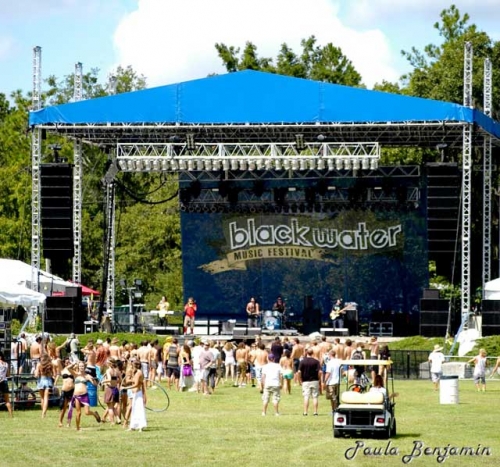
The 2nd annual Blackwater Music Festival was again at the beautiful 'Spirit of the Suwannee Music Park'. The name "Blackwater" is said to have come from the deep dark color of the Suwannee River. The river is black because of the flow from the Okefenokee Swamp where it has become saturated with the tannins from billions of leaves, roots, and bark. The offset colors of the bleach white limestone walls that surround each side of the river make for an awe inspiring view which is a beautiful setting for a weekend of good music.

blackwater2011_img01

Thursday

Former Champions CD

Former Champions employs a wide variety of styles and substance, offering 13 genre-bending tracks in this self-titled release.

Music on the Mountaintop 2011

This year’s MOTM took place at the gorgeous Grandfather Mountain Campground near Boon, NC.

FRIDAY

Unlike last year there was plenty of space to camp and it looked as if the campground was setup perfectly for a festival.  Campers surrounded two nice size fields. The first field was the location of the 3rd stage which had food and craft venders as well as a fantastic global structure built within it.  The second field housed the main stage and 2nd stage.  The 2 stages were small and basically the same size setup next to one another which kind of resembled the All Good Music Festival setup on a much smaller scale.

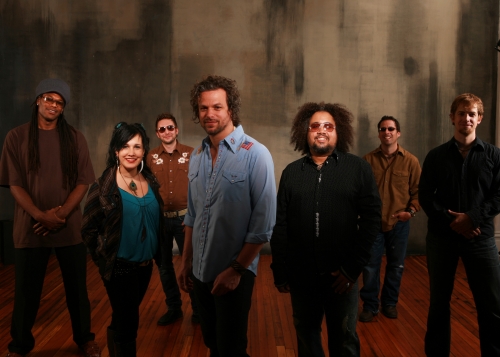
Beloved for their live performances, Rusted Root hits the ground running with a new slew of live dates to support their current release Stereo Rodeo.

Interview by Maisie Leach


Rusted

Rusted Root became a band twenty years ago. They're known for their fusion of bluegrass and rock as well as their inspired use of percussion that is drawn from African, Latin America, Native American and Middle Eastern influences and defies categorization.  Over the last several years they have sold more than 3 million albums worldwide and they have toured the world and the US with Toad the Wet Sprocket, Santana, The Grateful Dead, Dave Matthews Band, The Allman Brothers Band, HORDE Festival and, perhaps most notably, the highly coveted support role on the landmark Jimmy Page/Robert Plant reunion tour.


"Stereo Rodeo", their first disc in seven years, features original members Michael Glabicki (lead vocals, guitar), Liz Berlin (vocals, percussion), and Patrick Norman(vocals, bass, percussion). They are joined on this album by Jason Miller (drums, percussion), Colter Harper (guitar), Preach Freedom (percussion) and Dirk Miller(guitar).


Rusted Root hits Raleigh Amphitheater this Saturday, Oct 1st as part of the Bud Light City Fest. The doors will open at 5PM and the cost of admission is only $5!


Interview with Rusted Root's Michael Glabicki

After speaking with Michael, I learned much about the bands birth, evolution and journey. They have already accomplished their aspiration of creating a musical, culturally diverse community surrounding Rusted Root here in the U.S.. But their longevity and drive to keep going is leading to their next album which is expected to release in March 2012. Maybe the root is not so rusty.


HGMN: So, you are here in Raleigh?


Michael: Yeah, we are just here on a day off, then we go to Wilmington tomorrow and then we come back here and play on Saturday night.


HGMN: Excellent. Well, Raleigh is glad to have you here. How did you get the current lineup that you guys have and what was the beginning?


Michael: It started out with a very big idea. And, you know, we have evolved over time. Our evolution attracts people to the band...and we just kind of go with that flow. We just try to be true to what the band needs. We are all from Pittsburgh.


HGMN: Your music has a lot of multicultural ingredients as well. Where does that stem from?


Michael: I think I was personally exposed to a lot of different cultures, you know, growing up in Pittsburgh around the colleges. I was able to catch a couple African Drumming concerts here and there...not a lot of it but some. I never really studied it but I knew I wanted to use it in the songs that I was writing for the vision I had for the band. It's not really something that I went out seeking...it just happened.


HGMN: You've said you are looking to move in a direction similar to the Talking Heads...what do you mean by that?


Michael: I don't know what I meant by that actually (laughs). Other interviews have been saying that I said that. I'm like, "I don't know what that means." I think if anything it's just that our material is a little more groove oriented. In the past we have been very rhythmic but I think lately it's been very spastic and we've come in and out of grooves. I think on our new record you will see deeper grooves. I mean, "Little Creatures" by the Talking Heads kind of simplified what they were doing but they also kind of matured in the same way. I think we are moving like that too.


HGMN: Stereo Rodeo came out in 2009, what's your take on that looking back and what do you want to change on the next album?


Michael: For me I think Stereo Rodeo was mixing what I wanted to do solo on that album a little bit. I originally wasn't sure how I wanted to express these certain segments of myself and now I/we are trying to keep the Rusted Root thing more about the party and the more danceable vibe kind of stuff. Some of my acoustic songs that are kind of deep sometimes do fit best with Rusted Root. I'm not really sure why...I guess they just feel right in Rusted Root. 

My solo stuff, it's a different kind of songwriting, I can't really describe it. These two things are now very separate and distinct. Somehow, in the past two years I've had something click in my mind where I know what I want to do in each and there's no, kind of blur, you know? I'm not afraid to pull one song from the other if I think it works better in the other. I think that's big for this record. There's a lot of clarity in what we are doing now. And I think everybody understands it and is very clear and so we keep coming up with pure ideas. We are very focused and we move a lot quicker now. Also, we are producing ourselves. I am producing the record, we are recording it at my studio and there's a whole different process to that which I like. It's different and good because I think it's taking us out of the ways that we have made records before.


HGMN: How is that? Just more comfortable?


Michael: Yeah, exactly. And it has a different piece to it. We can reflect a lot easier on certain things but at the same time we aren't rushed, we have a lot more time and flexibility to create a spark. It's an experiment. We go in and we try until we get that chemistry going. That can be trying and then going across the street and playing pool for 4 hours, then coming and playing a song. It's just total freedom to try whatever we want. We can say, "okay we've got 6 hours to get this song down so let's go do it now." It's just a lot less rushed, it's cool.


HGMN: I'd like to dig in more to your solo endeavor, talk to me about that.


Michael: I'm doing a few different things. I'm doing an acoustic show with Harger and then we are bringing in one side man who plays drums, guitar, and percussion. Then I do a trio which is me, Preach and Colter from Rusted Root. These 3 projects cover the entire solo album. It's interesting, I can't do all of them all at once so I break them up in 3 different segments and then we get in the studio. But yeah, I'm doing with that and I think it's tough time wise so I have to give up something to do one other thing for a little while. For the next few months I'm mainly focused on Rusted Root and then I'll jump back into the solo thing for a little bit.


HGMN: Don't you wish you could have 2 lives all at once for time purposes? Sometimes I feel like there's too much I want to do.


Michael: (laughs) Right.


HGMN: If you didn't do music, what do you think that'd you'd be doing?


Michael: Umm, probably living under a bridge or something. Or I like a lot of things actually, I'm pretty good at construction, I can hang some mean dry wall. Maybe a plumber. I can see myself going back to school maybe finishing my degree.


HGMN: Did you go to college?


Michael: For half a semester maybe.


HGMN:  Where'd you go?


Michael: Um, Robert Morris college...no no wait (laughs) La Roche college in Pittsburgh. It's a small school and then I dropped out because I knew I wanted to play music. I think I'd written 2 songs at that point and dropped out and just started writing.


HGMN: What are you most proud of with Rusted Root?


Michael: Hmm, most proud of... I don't know, this may be like cockiness, you know? But I learned how confident we are and I think we can go on a stage next to anybody. And then there's a kind of warrior mentality. Does that make sense? Like we can go against anybody. We can stand our own. We toured with a lot of people, Robert Plant, Santana, Dave Matthews, Allman Brothers, Lenny Kravitz. All these bands, and we've held our own. And uh, it feels good, for us to be top of the game, you know? Gah, I sound like a football player. But there is that kind of feeling. I'm proud of our longevity. It just means we are growing something good.


HGMN: I know there's no standard day in the life of a musician and in the lives of bands. If you could put together some of your best memories from touring with the Dead and DMB etc. What memories would you piece together?


Michael: Probably the best was touring with Santana. He was just very gracious with us. I mean, the first day we started up on tour he invited us on stage. And we played 7 songs with him on his set. He would talk to me and give me advice every once in a while. I actually gained a couple guitar lessons. He would say, "Come on! Come in here and bring your guitar!" He thought I needed to know something he could teach. He was just a great guy all around. I remember Plant and Jimmy Page, that was quite an honor. We were basically little kids. I mean, it wasn't too long before that when I was riding my little BMX bike and going off on jumps listening to Led Zeppelin.


HGMN: How did you figure out that music was what you wanted to do?


Michael: I think I was just a closet guitarist for a little while, you know? But it was this extreme fantasy. I sat and dreamt about it. I think that was probably the most important part of the process. I would just be in my room a lot playing music and thinking about it. In high school I'd be in someones basement with a bunch of kids playing music. And as a joke I went up and sang Van Halen. And then at the end everyone was standing around going,  "Wow, that was pretty cool." In the back of my mind I was like maybe something is there in my voice. I think those 2 things were the beginning of a slow process on the guitar and kind of knowing I could maybe do the vocal thing. Then at 17 or 18 I just started writing music. For me, it was sort of what I wanted to create in the world. Not only in the music but with an idea of community and energy that didn't feel like it was in this country. We created an energy. 

As soon as I got out of high school I went to Nicaragua. I was very political at that point and wanted to change what was going on there with the contrawar. I wanted to witness it and come back to the states and tell people what was going on for real. And it didn't work. I kind of got really depressed because I couldn't do what I wanted to do. So there was that depression. Then I also learned that there was this whole world down there where people played music on the streets and there's poetry being spoken everyday, Jazz music every night. It was a really surreal environment of beauty. It inspired me to envision what I wanted to create here. And I think we did it. I think we created this community of high energy and good feeling.


HGMN: If you could say one positive thing about every member of your group what would you say?


Michael: Let's see. I would say Liz, her voice just stands on it's own. She has a unique way to look at song structure which has always been helpful for me. Preach is just pure musical. He can do just about anything. He's a natural. You can lean back on that guy and he's always there for you. Patrick just brings a good energy with the bass playing. He brings in excitement and good vibes. Dirk is great with the auxiliary stuff...mandolin, banjo which all fit well with the band. He's very supportive of everything that we do. He's just an all around necessary person. Colter brings a lot of ideas on guitar because he brings a lot of worldly influences like African and Brazilian and percussion ideas. Also, he's a funny dude who cracks jokes all the time so that's good.


HGMN: And what is everyone else involved in?


Michael: Liz has a venue in Pittsburgh called Mr. Smalls. She's doing real well there, she has a recording studio and there are a bunch of things she does there. Liz and Patrick both do solo work. Colter and Preach do shows together and write some stuff and do some recordings. Everybody keeps busy.


HGMN: Wrapping things up...You all are on tour until November. And then what are you doing? Back in the studio?


Michael: Yeah, we are going to go finish the record. We should be done with the record in late January for a March release. We will probably release the singles in late January. We are working on a DVD. There's a film director doing a documentary/creative Live footage kind of thing. He will get us in the studio with the new songs and everything. That will be out with the record in March. We are working on 6 or 7 new songs so that's always fun to see a crowds response to new material. We are doing fan funding now so if people want to help out with funding our record they can go to our facebook or website. It's called "Fortunate Freaks Unite" There's a bunch of packages that you can buy into, anything from a signed drum head to people can come to our sound checks and be filmed with us playing "Send me on my way" and then there's bigger packages which are us going to their house and putting on a concert. We have a lot going on right now.


HGMN: Are you going to get to discover Raleigh at all while you're here?


Michael: I'll probably just rest today mostly. We've played so many shows I feel like I just got hit by a truck. But yeah, I've always loved walking around Raleigh and the downtown area. My brother lives here now, so.


HGMN: Enjoy your time here! (cordial small talk exchange at end)


Upcoming Tourdates

Oct 01 - Raleigh Amphitheatre - Raleigh, NC

Oct 02 - Abbey Bar - Harrisburg, PA

Oct 10 - Taste of DC - Washington, DC

Oct 11 - Musica - Akron, OH

Oct 13 - Rustle Hill Winery - Cobden,IL

Oct 21 - Le Poisson Rouge - New York,NY

Oct 23 - Portland Fairgrounds - Portland, CT

Oct 28 - Gateway Clipper - Pittsburgh, PA

Nov 05 - Tupelo Music Hall - White River Junction, VT

Nov 06 - Tupelo Music Hall - Londonderry, NH

Nov 12 - Viper Alley - Lincolnshire, IL


http://www.rustedroot.com

Facebook

Myspace

Twitter
Sept. 27th, 2011 - Zach Deputy releases his long-awaited studio album Another Day, today.

Zach-Deputy-AnotherDay-Official

 The album captures Deputy's sensitive side, rich with soulful rhythm and blues numbers, ballads and the kind of 'feel good' enthusiasim that has made Deputy insatiably popular at music festivals and theater dates alike. A 'thoughtful singer and songwriter' (Palm Beach Post, 2011) Deputy can capture your heart as quickly as he does your feet.


"An impressive solo show"

Rachel McCarty, South Kingston Patch, Aug 2011


"He has so much soul in his music"

Candice Martinez, Examiner.com,  Aug 2011


"A soulful rhythm and blues album rich with ballads and mid-tempo songs..."

Associated Press, YahooNews, Aug 2011


With the help of Grammy-winning producer Scott Jacoby-- Zach Deputies new album taps into the spirit of Al Green, Taj Mahal and Stevie Wonder while retaining a classic sound and feel. Best described as soulful rhythm and blues, Another Day features 11 original tracks produced with Grammy award winning Scott Jacoby over just 5 days in Mission Sound Recording in Brooklyn, NY. To handle the ever-present Latin, Caribbean and African elements in Zach Deputy's backbeat and place them in the contemporary soul / pop format of the songs, Jacoby tapped Graham Hawthorne (Aretha Franklin, Harry Belafonte, Paul Simon, David Byrne) for the drum kit. Bassist Al Carty came into the studio after having played four church gigs that day. Despite the list of artists he has recorded or toured with (Lou Reed, De La Soul, Carrie Underwood, Gavin DeGraw), the church gigs alone proved that Jacoby was on the mark with this choice for the low end. Zach Deputy is, after all, a soul singer whose music is underpinned by Gospel as much as by any other musical idiom. Equally at home in the Gospel tradition, pianist / organist Will Buthod (Jay-Z, Fat Joe, Alicia Keys, The Harlem Gospel Choir) completed the studio trio that fleshed out Zach's vision for the recording-- a vision made real by Jacoby's pitch perfect choice of accompanists. These four accomplished professionals met for the first time on the first day of recording and worked as if they were old friends with a common purpose.


www.zachdeputy.com

Their self-released debut 'Read Me Out Loud' shines through a 6-month struggle of broken bones and busted budgets, tackling obstacles with rich indie soul and boundless enthusiasm.

By Simon Eddie

Photos by Mary Peyton Gosser

LRBalbumcover_final

Lizzy Ross - vocals and rhythm guitar

Jock Pyle - electric guitar

Brett Hart - bass

Drew Daniel - percussion.


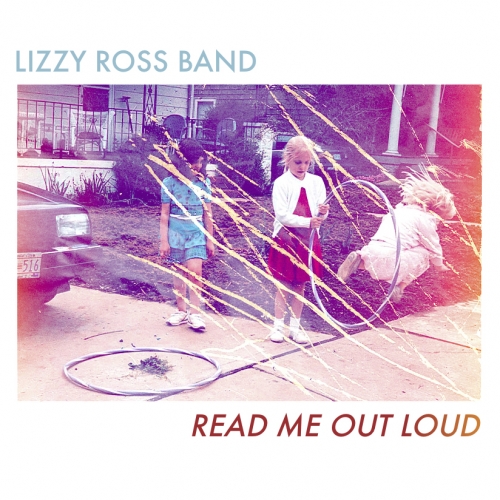
Many bands take their time crafting their first full-length. Chapel Hill's Lizzy Ross Band took a bit longer than they wanted. Their self-released debut Read Me Out Loud shines through a 6-month struggle of broken bones and busted budgets, tackling obstacles with rich indie soul and boundless enthusiasm. Upbeat rhythms and melodies hide more serious themes. Lyrically, Ross's sincerity cuts deep. This is an album about growing up, wanting to know others and be known yourself, about embracing the world and all of its incumbent risks.

These struggles mix perfectly with Ross' fiery pipes. She recently won the Carolina Music Award for Rock Female of 2011 and is nominated for Best Female Blues artist at the 2011 Charlotte Music Awards. It's easy to understand why. Her voice delivers a charming trill one moment, only to erupt in rough, bluesy emotion the next. It's a powerful instrument that's earned her comparisons to artists like Grace Potter and Edie Brickell among others. Backed up by sophisticated arrangements that include touches of country, '60s roots rock, and a dash of Motown, Ross stares down the uncertain future and sings it into submission.

"We started in January with four members, of whom only two would see the album through. We wanted to finish recording quickly so that we could release the album in April and tour on it the following summer - given the actual project timeline, this was a somewhat delusion idea. 

Drum tracking began at Arbor Ridge with Jeff Crawford and James Wallace. We weren't used to thinking of our music outside of the confines of live performance and were intimidated by the endless possibilities of recording.

We listened to our favorite records obsessively.  We picked apart the parts. We began to understand the layering and subtlety in our favorite music. We were making progress and happy with the early results of our recording. Then...

Drew broke his wrist halfway through January and recording ground to a halt.  We were stymied and significantly poorer than we had started (Thanks Dr. Aldridge!), but we had to keep going.  Drew recorded drum parts one-handed - tracking first the right hand part, them the left hand part.

Lizzy506

Recording drum parts one-handed at Arbor Ridge was slow and expensive.  Drew's healing was unpredictable, so this made our schedule hard to plan, and we were unable to book enough studio time to keep the project on track.  We floundered.

I couldn't take the waiting and the inactivity.  I wanted to get us on track and get this album made, and made well. We needed more time and space to experiment.

I bought Pro Tools.  I spent agonizing hours trying to set it up and tripping on idiotic technical problems where the issue existed "between the desk and chair" - i.e. operator error.  We started recording on a two-channel Tascam interface from 2008.

I began to get the hang of it.  We bought a $300, 8-input interface from Guitar Center so that we could track drums.  We set the interface and equipment up in my attic bedroom (the best-sounding room in the house).  It stayed there for three months. No AC.  We sweated.  Drew and I toyed with the equipment for hours. We learned it.  Drew's wrist was healing.  We turned on fans between takes and drank a lot of cold beer in lieu of climate control.

We finally had room to try oddball ideas.  I recorded doo-wop background vocals that got deleted and re-recorded.  Drew did and re-did drum parts. We piled chains and scrap mental together and recorded them as percussion on "Black River."  We recorded a guitar part for Cuyahoga with a 4" by 4" by 2" portable Honeytone amp set on top of a laundry basket (little, but nice tone).   Red Dog's barks bled into the background of songs.  We stayed up all night and into the morning, sweating and singing and experimenting.

Lizzy506

We expanded instrumentation beyond our usual four parts (drums, electric guitar, acoustic guitar, and bass).  We added saxophone, pedal steel, fiddle, cello, keys, and trombone. We invited friends and strangers into my sauna-bedroom to work and play and drink with us.

We were staying up all night, cables and drums strewn across the bedroom floor, constantly preoccupied with recording.  When my head hit the pillow, I dreamt of Pro Tools. We forgot to eat, shower, seek out human contact, and call our moms.

As the music began to come together, we went back to Arbor Ridge to seek out the superhuman keys skills of James Wallace.  James gave us prodigious patience and creativity and rounded out the sound of the songs.  He recorded on nearly every track, with the exceptions of Black River and Needle and Thread.

We squeezed finishing touches onto the album like the last toothpaste in the tube - slowly, and with great difficulty (and it always takes more than two hands.  Someone has to hold the toothbrush).  We sought out help for mixing and brought the album to Chris Stamey at Modern Recording in Chapel Hill. We found a stable bassist, Brett Hart, for the band.  As recording work slowed to a trickle and our schedules opened up, we started touring again. 

While we were recording, it had become more and more apparent that Drew and I were very compatible creative partners and were both dedicated to seeing our vision through. We had already been good friends, but we didn't realize that we made such a good team. Working with our former guitarist had been difficult, and it became clear that he didn't fit into this musical partnership.  We split ways and sought out a guitarist who was on the same wavelength as us.  Drew's longtime friend and former band mate Jock Pyle fit the bill.

In the meantime, Chris Stamey was loving the album and doing wonderful work on it.  He

lizzy5064

 remarked that it "sounded like a hit album, so (he) started to mix it that way."  He brought experience and new dimensions to the project.  He was the first professional we had encountered who seemed to care about it as much as we did, and his work brought out the best in the recordings we had made.  He took on additional production elements.  He was exceedingly generous with his time and talent.  He seemed to believe in our record like no one else had, and to us, his opinion meant something.  He stuck with us and has helped with every element from finding a designer to proofreading the album copy.

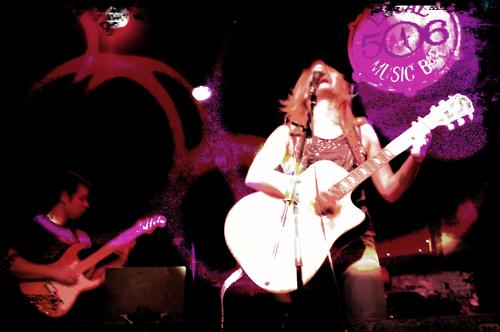
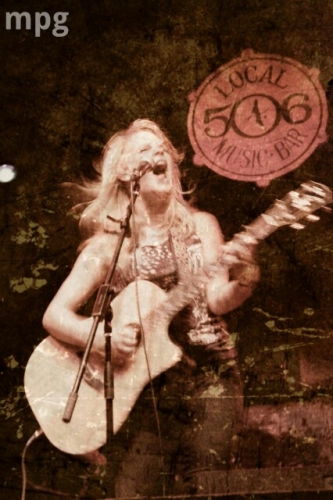
We struggled with album design.  After much deliberation, we chose for the cover a photo of my five-year-old self jumping thought a hula hoop (held by my older sister), about to faceplant... or maybe not.  It's unclear what happens.  I'm midair, on my way to something. In the world of a five-year-old, this is a wild, daring risk.  Looking back now, it just seems tragically funny.  Even so, I can't help thinking that we've been in a similar position recording this album.  We've put everything we have into this music, and now we are baring it to the world, holding nothing back in our pursuit of... of what?  Joy? Understanding? Applause at the Local 506?

The photo captures a fearless moment. I'm comforted knowing that, even if I took a horrible spill and mangled my knees and palms, I'm ok.  I don't even remember what happened.  It doesn't matter what happened.  I did it.

This has been the overwhelming lesson behind recording, and the message that drove my songwriting on many of the tracks.  Keep going.  If you don't know what to do, just do your best.  Try harder.  We need to believe that we can make it to wherever we're headed, even if we don't know where that is.

It's an album that I wrote about growing up, wanting to know others and be known myself. Embracing the world and all of its incumbent risks. It's called Read Me Out Loud. 

Days had turned into weeks had turned into months... by the end of the project, it took 6 months all in all.  My mom says anything worth doing is worth doing well, and anything good is hard to make.  We worked for it.  We made it through broken bones, busted budgets, disregarded deadlines, and musical confusion.  We made an album. We said what we meant to say.  Six months of sweat boils down to 42.1 minutes of sound.

We have many people to thank.  We have lots of work left to do. Making this album has been good practice at what I'm beginning to understand as two of the essential elements to survival in the music industry - dogged perseverance and belief in your work." 

- Lizzy Ross

Lizzy506

Lizzy Ross Band CD Release party w/ Big Something

Friday Sept 30 @ The Haw River Ballroom - Saxapahaw, NC

Doors: 7:00 pm / Show: 8:00 pm (event ends at 11:59 pm)

$10.00 - $12.00

Debut CD READ ME OUT LOUD to be release nationally on Oct 04, 2011.

Listen to it for Free right now!

FACEBOOK

TWITTER

Upcoming Shows

Sept 17 Carousel Festival - Burlington, NC

Sept 22 - Pisgah Brewing Company w/ The Broadcast - Black Mountain, NC

Sept 23 - Charlottes Festival In The Park

Sept 24 - H- Blast - Locust Hill, NC

Sept 30 - Sax Ballroom - Saxapahaw, NC w/ Big Something

Oct 01 - Private Event

Oct 02 - Club 333 - Brlington, NC

Oct 22 - Foothills Brewery - Winston-Salem, NC

Oct 29 - Shakedown Street - Raleigh, NC (HGMN Presents: Halloween Party Blowout)

Nov 11 - The Fat Frogg  w/ JujuGuru - Elon, NC

Nov 12 - The Lincoln Theatre - Beerfest with Acoustic Syndicate, Acoustic Mannor, The Morning After & More

Pages

Subscribe to Leeway's Home Grown Music Network