Feedburner

Mountain Jam - June 1-3, 2007 - Hunter Mountain, NY

mountainjamicon.jpg
What do you get when you cross a stellar line-up, sneaky security and police presence, and ominous weather? The answer is the third annual Mountain Jam. Oh, and I forgot to mention red clay mud.Most of us arrived dry and intact and looking forward to a weekend of great music. I set up shop in the middle of a tent city with good friends on all sides and proceeded with the weekend.

The first act that really struck me was, of course, Burlington, VT’s own, RAQ. They’ve really come into their own by heavily touring and playing together on stage all the time. Some of their songs cause you to pump your fist and chant anthem-like lyrics while others just make you groove. You can really hear that they mesh well and have a lot of fun bringing the funk as was most apparent in their afternoon set of music.

Asheville Music Jamboree - June 1-3, 2007 - Take 2

amajamicon.jpg
The Asheville Music Jamboree at Deerfields (NC) was a sweet treat to welcome festival season. This Eco-Conscious, Kid Friendly adventure in the beautiful hills of North Carolina was an excellent pot of roots rock music stew, from the Carolina mountain music to the roots of Jamaica, through to the revolutionary fusions of Rastagrass Appalachian Reggae and rock.

Echoes of revolution, positivity and respect for the Earth bounced all over the venue, from Ralph Rodenberry's "You and your light can change the world" to Sol Driven Train's "Humble yourself before the Earth," to Michael Franti's "Everyone deserves music, sweet music." The festival gave a little taste of the flavor of Asheville, NC, which is exactly what any festival should do for its guests. It was like the city of Asheville had a day in the park... the sights, the sounds, the community of peaceful people, those out there driven to make a better world...

Known for their clever songwriting, lush vocal harmonies and one of the tightest rhythem sections on the scene, 56 Hope Road travels around the country in a 1988 Fleetwood RV, sharing their message of optimism and an organic blend of rock and soul with fans of all ages. Bonded like a family, the music has an unmistakable honesty and openness. They allow the joy of spontaneous creativity to color their song-based arrangements - neither losing their musical center, nor restricting its growth. With a blend of acoustic songwriting, funk, jazz and improvisation, this music is acoustic funk at its finest!
By Clara Rose Thornton

Rax Trax recording studios is housed within a squat brick building in Chicago's frenetic Lakeview neighborhood. Crouched on an unassuming side street and requiring low-level mental athletics to pinpoint its address plate or figure out that one has, indeed, arrived at the right spot, it doesn't seem to be part of the surrounding hustle and bustle. It hangs back, content, letting the bistros and flashy clothing stores do their respective dances for passers-by. Once inside, though, a palpable rush of human warmth, benevolence and radiant enthusiasm zings through the air like a wayward dart. Bright colors, band stickers, scribbled one-liners on kitchen cabinets and both hilarious and poignant photos of musicians who spent endless hours there eking out their creations only enforce the feeling. The inner sanctum of Rax Trax can be likened to a beating heart, joyous for its own existence and spreading that love to those who venture toward. Oddly enough, this is exactly the nature of roots rock purveyors 56 Hope Road, who were camped out there on a spring Sunday, tirelessly and joyously working on their upcoming 4th album due in the fall. The seven-piece "acoustic funk explosion" -- Dave Hamilton (lead vocals, guitars), Casey Fitzpatrick (saxophone), Greg Fundis (drums, percussion), Chad Sanders (bass), Anne Hamilton Katzfey (vocals), Matt Katzfey (percussion) and Tim Reid (vocals, keyboards) -- are not interested in screaming their worth to the world and constantly talking a boastful game about their heavy touring schedule, improvisational prowess or steady rise to national recognition, like some bands. They'd prefer you to just step inside their world, and see for yourself. Voted by Jambase as the #1 Road Warrior Band, they're surely headed to a venue near you. They can also be seen at this year's venerable Dogstock, a massive philanthropic festival event taking place in Melvern, Kansas, July 26-29 (www.dogstockfestival.com). In this exclusive interview, Hamilton gets candid and possibly controversial while taking a break from his recording session, nursing coffee and an infectious smile.

Home Grown Music Network - Can you describe the band's origins?

Dave Hamilton - We started in Decatur, Illinois, around 1998 as a three-piece - guitar, bass and drums. Then I moved to Colorado for a year and started writing tunes. I moved back, and that's when our drummer Greg went to DePaul [University, in Chicago] for grad school. We thought, "Hmm, Chicago's a good place to start," so we started playing music here. Didn't play a ton of gigs at the start; we worked our way up. We saved all our money and went on tour three years ago. We've done about 220 shows a year for the last three years.

HGMN - How many band members are there? There seem to be a lot.

DH - There's a touring group of five. My sister and her husband play with us around Chicago. But she just had a baby a month ago, so she's not back in the swing yet. She's an amazing singer, and her husband plays percussion. They both will be on this new album that's coming out.

HGMN - What's the new album going to be called?

DH - Play It By Ear. Well...probably. (laughs)

HGMN - Your music, as I characterize it, has a very warm, richly personal, "common man" sort of sound. Was this a conscious choice? In other words, did band members specifically look to certain groups or genres to garner inspiration, or did the sonic aspect of 56 Hope Road evolve more naturally?

DH - [It] more naturally evolved. We never tried to sound like anything. We had our own sound and we realized that's what it uniquely was. It's good driving music. It's mellow a lot of the time. But compared to our live show... Our live show is very energized and you'll be dancing the whole time.

HGMN - What themes do you like to explore lyrically?

DH - When I first started writing, I never wanted to sing about relationships. It seemed like that was the standard cliched song. As if...

HGMN - ...everybody upon everybody does it.

DH - Everybody's singing about how his or her heart's broken. But then my heart got broken, you know what I'm saying? So as far as getting the truthfulness out from inside, that's the most truthful music I've ever written because it really struck me deep. This next album is very reflective of what relationships are about, expectations within relationships, getting let down in relationships and also getting surprised in a relationship. Before it was about trying to write political songs or songs that were about everyday life besides relationships. But man, you know how it is.

HGMN - Yeah, when it happens, it happens.

DH - (laughs) When it happens, it happens. And as a songwriter, that's the best way to get it out. You need to get your feelings out there so you can move on.

HGMN - So do you think of songwriting as a sort of catharsis, then?

DH - Yes, completely.

HGMN - How would you describe the dynamic between 56 Hope Road and its audience?

DH - It's a close-knit one, definitely. We try to bring a party atmosphere to our shows most of the time. That's what people have come to expect. I love doing the acoustic shows too because you can really get it mellow and have people just sitting there and listening, not talking. The relationship is a constant, growing thing. You've got new and old fans, and that relationship is always, hopefully, growing, and will never stop growing. Hey, that's a hard question!

HGMN - Have you started to see a sort of cult-like fan base growing around the band?

DH - Definitely. In Colorado, we've got a lot of stuff going on. Colorado, Arizona, and Minnesota are hittin' for us. We've found a couple of pockets where people are just into it. So we keep on going back to those spots, and magic will grow. We just did our first tour out west, and man, California's where it's at.

HGMN - Why do you say that?

DH - Because the people are so open to experience new things. They're not going to judge you the way it seems sometimes on the East Coast or even in the Midwest, where people have preconceptions of you or your music or what you might look like or might sound like. Out there, there's this freedom. They accept your expression more. They're not afraid to dance by themselves (snaps fingers) to start it off. I love the freedom out there.

HGMN - So do you feel that the scene in each of the four regions of the country has it's own tone?

DH - Oh yeah.

HGMN
- How would you characterize, say, the Midwest versus the South, specifically in terms of sound?

DH
- Well, South like New Orleans -- that's where a lot of music came from. A lot of the funk bands, like The Funky Meters, they created the whole scene down there. You've also got your southern rock, which is a whole 'nother scene. In the Midwest, there's also an incredible mix. You've got all kinds of music up here. You've got your hard rock, you've got your rockabilly, you've got your blues, your jazz.

HGMN
- It seems that there's starting to be a lot of integration between hip-hop and rock -- rock improvisation with a hip-hop MC in front. I feel that's really happening in the Midwest more than I see it happening in other places.

DH - That's happening a lot out in the mountain towns, too. In Colorado, they're so into it. You get an MC up there with you, and they can blow up the crowd (snaps fingers again) like that, if they're good. I love that aspect. We do have a couple rappers who come and play with us occasionally, and I love it every time. I would love to have an MC in the group permanently. It would change our direction a little bit, but it would be great if that person could maybe play percussion and sing, too. (laughs)

HGMN - Like while they're rapping, have some conga drums going?

DH - Seriously!

HGMN - In terms of the tone of the scene in different regions, I really feel -- and I might be biased, since I grew up here -- that the Midwest is one of the most accepting. You say that you feel California is the most, but I don't know. When I lived on the West Coast -- and granted, I was in Oregon and only made it to California a couple times -- I felt the presence of a sort of cliquish aspect, more so than in the Midwest. The Midwest to me seems "down home." You know, flatlands. Very friendly and open.

DH - Well, I do hear what you're saying. That sounds like Boulder. And I don't want to point fingers at Boulder, but it's soooo cliquish. Many people there have to be Mr. and Mrs. Cool.

HGMN - Like, (affecting a smirking grimace) what bands are you into? That kind of thing.

DH - Yeah. But my point mainly focused on there being more of the people there that are into our style of music. Folks are into it here, but there are a lot of people here who just want to hear '70s rock n'roll. That's what they listen to, and they don't care to open their mind up to other things. They just want to hear a cover band. They want to go see stuff they already know so they can get drunk and not worry about it. I like crowds that are about original music, about creating art, about doing something different and opening their minds to explore new things.

HGMN - Do you feel there's a different level or nature of interaction possible between a band and its audience in a festival atmosphere versus a bar or club show, or vice versa?

DH - The festival atmosphere is so cool because there's so much music going on. You're there for days, too. Everyone's on his or her own little personal journey. At a club you kind of just show up and leave and go back to your house. But at a festie, you're just there hanging out, you know? You may meet a person, and be hanging out with them for the next two days. I love that; people at festivals are always looking to meet new people and to experience new things.

HGMN - So you prefer that atmosphere?

DH - I can't stay at a festival, like...forever, you know what I'm saying? (laughs)

HGMN - My mind would go.

DH - Yeah. But it has its major joys. In a festie atmosphere people are already acclimated to a situation of listening to music -- they're there and ready. And I love people most when people dance. That brings me joy because I can physically see their energy, I can take that energy and give it back to them, and then they give it back to me and I go (makes a "fly away" motion).

HGMN - So it's a reciprocal relationship.

DH - Exactly.

HGMN - How did you get involved with Dogstock?

DH - We just put our press kit in and they contacted us. We have done a couple of things with [Loyal Family, the festival organizers and promoters]. Loyal Family is part of our network and our big family, so hooking up with those guys was a no-brainer.

HGMN - Dogstock is quite appealing to me because of the fact that it's a benefit show, for the Akita Adoption and Rescue Foundation. I find it very unique for a festival of that size -- 100-plus bands on four stages -- to donate proceeds not only to a good cause but to a cause supporting animals. That's pretty amazing, and I'm interested to hear your thoughts on festival culture's role in philanthropy. Do you feel that there's enough of a humanitarian/goodwill aspect there currently? Do you feel that should be hyped up?

DH - Every festival, in my mind, should be serving a higher purpose, for humanity and dog-manity.

HGMN - (laughs) Dog-manity? Maybe animal-manity. "Anamity!"

DH - We're making great new words here.

HGMN - I commend all the bands, like 56 Hope Road, that got involved. If every festival could have that aspect going on, then, when the bands are promoting their shows there they're also promoting the good cause.

DH - Activism, fundraising and philanthropy are really important, definitely. Music is about spreading love, at least for me. That's the main thing. That's why we do what we do -- to make people happy. I just want to make people smile and possibly relieve them of some of the stresses in their lives. Afford them a little getaway. And the songs that I write, maybe they can get a message out of them that can help them understand things within their lives.

HGMN
- Can you comment on the current explosion of the festival scene, and what you think 56 Hope Road's place is in it?

DH - I'm happy that it's exploding. It's definitely getting bigger and bigger. I wish we had a bigger place in it. We're on High Sierra [in Quincy, California, July 5-8, www.highsierramusic.com] this year, and I'm really excited about that. I've heard that festival is the bomb.

HGMN - I've heard that it's on another level.

DH - Another level, yes. There seems to be an increasing presence of cop influence and dirty vibes going around at some of the bigger festivals, and I've heard that High Sierra's not like that at all, that there's this free atmosphere. Everyone's chilling out, having a good time. People don't have to worry about getting searched, undercover cops and all that crap. So I'm looking forward to it.

There's been a switch. When I discovered this scene growing up, it was the Grateful Dead. I was 18, thrown out there, and was like "Wow. This is what it's about. I can't believe people are like this, are so nice like this. I can talk to anybody." The community was there. And then the whole Phish thing started. All those Phish kids... Oh man, I'm just sitting here talking crap. (laughs) I hate that; never mind.

HGMN - It's okay, you should express yourself.

DH - It just seems that [the Phish] scene was all about selling drugs and getting messed up. It wasn't about the music, you know? Things changed. I miss the days of everybody getting together and having a good time for the music and the music being the number one thing. Now, the music seems secondary to the party.

HGMN - Do you acknowledge any specific moment when this turn occurred? I know you mentioned Phish, but is there any specific moment you can recall in the 1990s when it was obvious that it'd started happening? Because festivals basically started to proliferate in the mid-90s, and I'm wondering if you see any correlation.

DH - In '96, right after the Grateful Dead quit [touring], right after Jerry died, is when I started to think about it. I went to a couple Phish shows, and I guess I was just trying to get the same feelings that I got at a Dead show. It never even came close. It was a younger crowd, but that younger crowd is older now. Summer Camp and other festivals are where those kids are now.

HGMN - Okay, last question: If you could give three adjectives that describe 56 Hope Road, what would they be?

DH - "Positive." Positivity is big for us. That's something that we all struggle with within our own lives. We focus on staying positive and keeping that ball rolling [in the music]. "Aggressive." We are aggressive in the way we run our business and in the way we play our shows -- when it's time to play, we're all there, we're a team, and we're going to give the best show that we can. We're aggressive in pursuing positivity. And lastly...we're lovable. Does that count?

HGMN - It sure does. (laughs) So is that what a Dogstock audience can expect, "positively aggressive love?"

DH - Absolutely! Good, we made it happen! I was worried about that one...

Check out 56 Hope Road's most recent studio disc, the sweetly lyrical Drop it All, available now at the link above. Also available is their debut studio creation All Points Connect -- featuring fan favorites "Future Sons" and "New Philosophy" -- as well as the soaring live compilation Once in Our Lives, all available at Home Grown Music. See you on Hope's road.       
Whether it's the searing social messages, the party uke songs, or the three lovely ladies harmonizing that seduce you to the groove, one thing is undisputed: Public Property is hot.
By: Patrick Knibbs

HGMN: For those unfamiliar with Public Property how would you describe the band in one sentence?

Bess: Public Property is a 7-piece reggae act out of Iowa City, IA, complete with female vocalists, full harmonies, a ukulele, and songs that speak to our modern struggles without relying on any religious context or contrived assumptions of what reggae should be.

HGMN: One doesn't usually picture Iowa City as a hot-bed for Reggae. How did this all come about?

Bess: I could say that it came about because I was born and raised in Hawaii and reggae is huge there. I grew up with it and wanted to represent what I loved about the music I grew up with in Public Property. Or I could say that these days it doesn't really matter where you're from, because music is readily available all over the world and cultures across oceans are constantly influencing each other. It all depends on what you're exposed to.

HGMN: With seven members, and soaring gas prices. How will Public Property survive on the road? Have any your upcoming "road" gigs been hampered by this?

Bess: Not yet. We try and keep a tight budget as much as possible. We eat cheap on the road and are always watching what we spend and what's coming in. Our van runs on diesel and has fairly good gas mileage considering the weight it's pulling, so we probably don't have it as bad as some other bands. Plus we can run on biodiesel when we can find it. We will most likely become part of a biodiesel coop in IC very soon to help cut the cost and help support local biodiesel and for obvious environmental reasons.

HGMN: Where does Public Property foresee the future of music, in general, heading? And how will Pub Prop fit into that vision?

Bess: Right now it looks like all sorts of styles are merging and established styles continue to push on and evolve. As Jaco said, we don't play fuckin fusion, we play music! That being said, many of our heroes and influences are dead, so it's good that we maintain some sort of line of evolution. I am proud to play reggae music and keep reggae music alive. I don't believe any established "style" or genre will ever die. Hip-hop will never die, reggae will never die. They will just keep evolving with the times. I met a Rasta in San Francisco who had played horn with Bob Marley way back in the day. He must have been in his late 60s or early 70s. He said he was happy to see that our generation was continuing reggae music, the evolution of it, etc. That was one of the best things anyone could have said to me about our band: that he was happy to see we were continuing what he and so many others had started. I'm not sure where we fit in this future, or this present. Hopefully we can fit on your iPod or in your CD player.

HGMN: Has playing and traveling with the two ladies (Margaret, and Marvena) made the gents in the band behave a little differently?

Bess: Mareva is spelled like so. Traveling with the ladies has never been different for me, since they were pretty much in the band from the beginning. We would probably be more disorganized, eat worse food, and argue more if they weren't with us. But who knows? I was dating Mareva before she joined the band, so that is a whole different set of circumstances. I imagine that if the girls weren't in the band we'd all be a bit more slutty, though maybe not, cause some of us don't get much on the road anyways. We'd be a more boring and predictable bunch without them, and probably say more stupid shit because of it.

HGMN: What can we expect from Public Property in the immediate future - new album, touring, ect?

Bess: Right now we are rehearsing and writing new material. We are crossing our fingers that our 4th album will be released in 2007. Right now it looks promising. We are pretty much constantly touring. After Wakarusa we are going to Colorado for a couple weeks, then Returning to the Midwest for touring and some recording, then back to Colorado after Dogstock. We are taking a 2 week vacation in August after which we are jumping back into touring the Midwest. We are planning an east coast tour in the fall and tentatively planning a tour to the West coast and Hawaii in early 2008.

HGMN: Are there any groups you guys are playing with this summer that you're looking forward to see, from a fan's perspective?

Bess:
Oteil and the Peacemakers were great to see at Summercamp. Unfortunately we will miss a lot at Wakarusa because we have to keep moving after our show. Looking forward to playing a couple shows with Euforquestra and playing at Camp Euforia in July (a local festival they put on). If we get into the 10,000 Lakes Festival, we would all be pretty stoked to see Dweezel. Crossing our fingers.

HGMN: How do you feel about the mission behind Dogstock? And our any of you guys pet owners?

Bess: I think it's a great mission. Unfortunately we are not pet owners. We all live together and all tour together, so it's too much to properly take care of a pet. Margaret has a cat that she had to give up to her mom because of all the band touring. Right now the rabbits in the yard and our pit bull of a merchandise man will have to do.     

Asheville Music Jamboree - June 1-3, 2007 - Take 1

amajamicon.jpg
As I sit at my computer and download the photographs my family and I had taken over the weekend, I cannot help but reminisce about those wonderful days in the North Carolina Mountains.

As a volunteer, my three children and I arrived on Thursday and set up camp in what was to become the “family camping” area. By Friday afternoon this small wooded glen was filled up with wonderful families, whose children became fast friends, playing endless games of tag and exploring. And what exploring there was! On our first day we found several wonderful places to swim (there were two lakes) and a wonderful babbling brook to wade in. The water was cold, yet refreshing. It was a nice treat after getting all sweaty setting up camp.

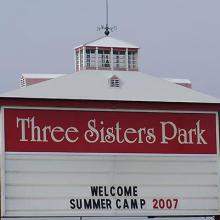
Summer Camp Music Festival - May 25-27, 2007

summercamp_articleimage.jpg
As music-and-camping festivals become more and more ubiquitous, there are an increasing number of ways that enthusiasts categorize their favorite, and not so favorite, summer haunts. There are the “massive festies” that will certainly not fail to be a party touched with large-scale hedonism, nearly 24-hour activity and welcomed sensory overload, i.e. Bonnaroo in Tennessee and 10,000 Lakes in Minnesota. There are the “chill festies” like Connecticut’s long-standing Gathering of the Vibes and California’s High Sierra.

PART 1: Of or Pertaining to a Certain Grit…

Euforquestra is an eclectic world-beat ensemble from Iowa City, IA with interests in different cultural and traditional musics from all over the globe. The band has made a mission statement out of preserving different traditions, undescriminatingly trying anything at least once and fusing different styles that appeal to them. The self-proclaimed "Afro-Caribbean-Barnyard-Funk" touches on such genres as Afrobeat, Afro-Cuban, Samba, Soca, Funk, Reggae, and Bluegrass.
     Interview with Matt Grundstad of Euforquestra

Interview by: Stephen Reinheimer

HGMN: Euforquestra--the name can be a bit difficult to pronounce. Who came up with the name? Where does it come from? What is its significance?

Matt: The band was originally called Euforia. After adding a horn section and extra percussion, we all looked at our stage setup and thought it looked like an orchestra. So... combine Euforia with orchestra, give it a Spanglish sort of spelling to represent the Afro-Latin aspect of our sound, and you get Euforquestra (pronounced yoo-FOR-kes-tra).

HGMN: Being an eclectic band, how is it decided what genre is played? Does everyone agree in musical taste? Do certain band members yield a stronger interest in other areas than others?

Matt:
We just try to keep our minds open. We don't always agree on everything, but when we write and/or arrange music, we try to find ways to incorporate everyone's ideas. That is one of the reasons why people have a hard time categorizing us. If you break our songs down, you can see elements of many different musical styles all occurring at the same time. Each member specializes in different things. We use that to our advantage by working together and learning from each other.

HGMN:
Being such a young band, what were some of the things you were involved with individually (or collectively) before Euforquestra was born?

Matt:
All 7 of us have been musicians our whole lives. We've all participated in wide variety of musical endeavors (some school related, some not) and have learned from many different teachers. While each of us have musical grounds that are unique from one another, we all share the ideology that any musical experience will make us better musicians. As a result, we have a very versatile group.
As far as formal education goes, most of the band members have music degrees. I have a degree in percussion performance from the University of Iowa and I have traveled to Cuba on two separate occasions where I participated in intensive workshops on folkloric Afro-Cuban drumming, singing, and dancing. Adam Grosso (bass) got his undergraduate degree from the University of Northern Illinois before he went on to get his Masters Degree in percussion at the University of Iowa. He has also studied folkloric music in Cuba, and in Trinidad. Both of our saxophone players studied jazz at the University of Northern Iowa. When Austin Zaletel (alto sax) was done with college, he went to live in Brazil for 6 months where he studied many styles of music including Samba, Bossa Nova, Forro, and Capoeira.

HGMN: Were you all always friends? How did you meet?

Matt: We all met each other by being active in the Iowa City music scene. I think it was persistence that brought us together. We've all watched each other play with different groups over the years that have come and gone. In order to get a good band together that is going to last, several things need to happen. First, you need to find musicians who are proficient on their instruments. Out of that group, you have to find people that have similar musical interests and who can get along with each other. From that group, you have to find people that have a common goal. Not every musician wants to play full-time and deal with all of the grunt work that goes along with it. As groups develop and get more serious about what they're doing, the less dedicated members tend to get filtered out and replaced by people who are a better fit for the direction that the band is headed in. That's what happened to us. Our group started in the late 90's, but has only been together in it's current form for about 3 years. Now we have a group where everyone shares the common goal of taking this band as far as we possibly can.

HGMN: Your schedule this summer appears to be fairly busy. Would you say traveling fits Euforquestra as a band? Or do you consider yourselves better as a studio band?

Matt: We love to travel and play live shows. That is our favorite part of doing what we do. We love the studio, too, but for different reasons. For one thing, putting good studio albums together enables us to get gigs. It's our "ticket to the ball game" if you will. But also, spending time in the studio really helps with the song writing process and tightens up the band. When you're in the studio working on a song for hours on end, you are forced to look at all of the fine details and intricacies of your music that you might have overlooked otherwise. Listening to recordings of yourself lets you get a different perspective on what your music sounds like. Just because something is fun to play doesn't necessarily mean it's going to be fun to listen to.

HGMN: I couldn't help but notice your tour dates were predominately in the Midwest. Do you have plans to expand coast-to-coast? What is preventing you from a broader touring region?

Matt: Our main reason for spending so much time in the Midwest, as opposed to being on the road constantly, has had to do with our availability. We wanted to let everybody in the group have a chance to get their college degrees. That limited us to weekends, spring break, and summer vacation. As of last December, we're all finished with school so we're starting to broaden our touring region. We've spent most of our time concentrating on Colorado, but have also played at clubs and festivals in Texas, New Mexico, Idaho, and Montana. Within the next few months, we'll have also made it out to both coasts.

HGMN:
Which do you prefer, festivals or concerts? Why?

Matt: Definitely festivals. For one thing, we love to play outside. It's way more fun and satisfying than playing in some smoky bar (weather permitting, of course). Also, it's an opportunity for us to play for new audiences. People that hang out in bars or clubs tend to fall into specific age ranges and demographics. A good festival will bring out people of all ages, and from all walks of life. While these people's musical tastes may vary, they are all congregating in the same place for the same reasons. They want to be part of a music community. The idea of fostering community is very important to us. In America, a lot of people tend to listen to their music privately (e.g. in their car on the way to work, or walking around listening to their headphones). There is also a tendency for children to want to listen to something other than what their parents like and vice-versa. The Euforquestra plays a lot of music that originates in places like Cuba, Brazil, and West Africa where playing and listening to music is almost always a community event where everyone participates in some way. Playing festivals helps facilitate that type of atmosphere. There's no reason why we as Americans should segregate each other based on age.
Festivals also provide us with a great networking opportunity. It's always fun for us to meet other bands and talk to all of the people who work behind the scenes to make everything run smoothly. We have our own festival called Camp Euforia that we throw each summer just South of Iowa City so it's nice to get advice from other people who put on similar events. This year, our 4th annual festival will be held on July 13 and 14. Check out www.campeuforia.com for more info.

HGMN:
You categorize yourself as an Afro-Caribbean-Barnyard-Funk band. Who first defined your music this way? Would you consider yourselves to revolutionary? Do you know any other bands that would fit in this category?

Matt:
People are always asking us to describe our music by putting it into a specific category. That's not an easy thing to do because the answer to that question would depend on which song they are asking about. Since we don't stick to any specific genre, we decided to describe it the same way it is created: by combining genres. Most if not all new music in the world that gets created and would be considered "original" is a product of combining ideas that already exist. It's kind of like a painter painting a red circle. Red circles have been used before, but how is that particular artist going to use it? What other colors or ideas is he/she going to combine it with? What types of emotions is that painting going to evoke? It's those types of things that will make the art original as opposed to being just another red circle.

HGMN: Why is it that you call your horn players Ryan Jeter and Austin Zaletel the Stank Horns?

Matt: All I can say is that they didn't choose the name... the name chose them

HGMN: So, the Stank Horns worked with Millstream Brewery to create a pale ale which will be provided at Camp Euforia Outdoor. Are there any plans for other beers in the future? Where else can we expect to see these beers sold?

Matt: They've been brewing beer for a few months now and have already come up with several delicious recipes. The one that Millstream is currently brewing is called E.P.A. which stands for Euforquestra Pale Ale. If you like hops, you're gonna love the E.P.A. If not, keep your eyes open for different flavors in the future (including the Stank Dank). Camp Euforia will be the first time that the Stank Horns' beer will be sold, but it definitely won't be the last.

Blueground Undergrass was originally formed in 1998 by Reverend Jeff Mosier. While breaking up in 2002, the band came back together with a multifacet music mix and some new faces. The band is composed of Mosier (vocals, banjo), David Blackmon (mandolin, fiddle), Matthew Williams (guitar, vocals), Seth Hendersot (drums, percussion, vocals), and A.J. Adams (4 string and 5 string Fretless Electric Bass Guitar). The sound of Blueground Undergrass brings audiences to their feet. Their new album Faces combines an energetic bluegrass sound with the freedom for improvisational mastery. When I caught up to the Reverend Jeff Mosier he was able to speak about his upcoming festivals, his views on animal rights, influences in his music and the composition of the new Blueground Undergrass.
Interview by - Erin Wheeler Wesner


HGMN: What future projects are you going to be doing, if any?

Rev. Jeff Mosier: Not really sure. We are talking about a DVD and I personally want to work on a pod cast about music and the mind. There are a lot of new shows up on archive.org of the line-up we have now with Seth Hendershot on drums and A.J. Adams on bass. David Blackmon and Matthew Williams and Myself remain on the front line so to speak. We would love to do something visual that would allow us some footage to talk about what we do and the process of BGUG.

HGMN: What category would you put your music style into and why?

Rev. Jeff Mosier:
Experimental on many levels. We are bending genres and trying styles and instruments that have never worked together in music. Banjo and fiddle driven rock hasn't been done that much in the past. We are song driven roots rock with bluegrass sensibilities at the end of the day. Sometimes I honestly don't really know how to describe what we do. What we do is more like watching a cooking show than watching a band. The process is more interesting live then what ends up on tape at times. We urbanize rural ideas and ruralize urban ideas.

HGMN: Who is your biggest musical influence?

Rev. Jeff Mosier:
Col. Bruce Hampton. Ret. nobody else comes close for me. The band would list also Vassar Clements, Bob Dylan, Wilco, Jay Farrar, Gram Parsons, Ween, Grateful Dead, New Grass Revival and Bill Monroe, and many more

HGMN:
Who is the person in your life that impacts you the most outside of music?

Rev. Jeff Mosier:
My wife Kathleen and my children. Col. Bruce Hampton, Eckhart Tolles the philosopher, Writer Kurt Vonnegut, Jon Stewart host of "The Daily Show", Bill Moyer, Jazz pianist Kenny Werner's book "Effortless Mastery", The book "The Four Agreements" by Daniel Ruiz, Various fans of the band that have become my friends over the years, Books on tape, My personal trainer at the YMCA whenever I get off my ass and go see him and stick to the program. Dr. Andrew Weil and his books on health and nutrition, PBS and NPR. Fred Rogers when he was alive. Movies like "What the Bleep do we know" and the "The Secret" and all great independent films that try to document human existence with a bent towards changing it for the better. Bloggers. Comedians George Carlin, Dave Chapelle, Lewis Black and Bob Newhart.

HGMN: Blueground Undergrass has made many transitions since first beginning, how do you think these changes have impacted your fans?

Rev. Jeff Mosier: I'm not really sure. Our real fans talk to us and understand the changes. I never have thought that we were popular enough to make that big of an impact on many people. The band has always hovered in a small cult like status and never "broke" out in the true sense of popularity. If I had ever measured our success that way it would not have lasted as long as it has. I always tried to get the music right and the line-up stable without worrying about "making it". "Making it", to me, is simply making music that you are happy with and that challenges you. Obviously line-up stability has been a struggle for the band since the beginning. Some of it was directly my decision and some was just a function of life changes and circumstances in the lives of some of the early members. The biggest struggle I think for people was the abrupt nature of the break-up, which was sad but necessary at the time. We were all done on some level with various aspects of BGUG. They were mostly done with me. I get that now, I didn't then. Life is all about learning from life itself. I hope I have done that. Having regrets is an exercise of futility and forgiveness is a gift you give yourself as a good friend once told me right after the band broke down. Seth and AJ in my mind and in the mind of many if the first truly suited bass and drummer for BGUG. They hold the music up without stylistically coloring everything with a specific sound. They are great players, but they also can play simple and yet they bring their own ideas to the table since they have known each other since high school. They are also curious and interested in BGUG's music, which has not always been the case with all players. I think their agenda is simply to be the best they can be for the music and that's hard to find sometimes in drummers and bass players. If you haven't heard us live lately you would probably be really surprised and no one is harder on BGUG then I am. We are really having fun and the shows have been everything I ever wanted in my vision of Blueground Undergrass.

HGMN:
The addition of Matt Williams has brought a new flavor and sound to the band. What is Matt's background and how did you begin working with him?

Rev. Jeff Mosier:
I produced a record for "Captain Soularcat" when he was in that band. That is where we met. He had had several bands mainly based out of Carrollton, Ga. And the only one I had heard of was "Dysfunction Junction" back during the days of "The Dunham's" when they had played a radio event. He's great and he sings and he writes and he's nothing like me which is great. His heroes are many of mine and I really liked his songs and mostly loved his drive and his pure intent for being on stage. He needed a band that would showcase his material and put him under the kind of performance pressure that everyone needs to get that edge that only comes from playing all the time. He immediately rose to the occasion and gets better and better at his craft as time goes on as we all hopefully do. It reminds me of what happened to my playing when I joined ARU, it was do or die for me back then. His songs are great, his voice is great and he loves people and he's not only easy to work with but he is a pleasure to be around which is hard to find when you lead a band and you're looking for people. Bruce used to say "you have to be a person first and player second." So many people come to bands with so much to prove and with a chip on their shoulder. Matthew just wants to play and learn and be, he's great that way and teachable on many other levels as well. I've never enjoyed being on stage with anybody as much as I do him. If nothing else ever comes out of BGUG, I will be proud of having at least had a small part in revealing to the world the talent of Matthew Williams.

HGMN:
Many fans certainly want to know, what is going on with the bass player situation and why hasn't there been consistency?

Rev. Jeff Mosier: There is consistency now. You have to find a "rhythm section" not just a bass player and drummer. They have to want to work together or the music sucks. People forget that the first rhythm section I played with in rock was Jeff Sipe and Oteil Burbridge. My standard is high and if it's not right, meaning the feel and the improvisational pairing of skills, BGUG can't do the thing that we do best which is improvise through songs and inside of songs. Fans often project way to much on the situation as if it were always personal. Don't get me wrong business is personal, but like in any business you have to have the right person for the job. Just because someone is nice and the fans like him or her doesn't mean they are right for the band and the music of the band. Many bands in my opinion let their music suffer in order to avoid conflict. The jam band community is often guilty of thinking that if everybody just loves each other the music will be great. Chemistry often happens between people who struggle to get along. The music must come first. The ultimate way to cheat yourself, your music and ultimately your fans is to compromise the music itself. I do yearn sometimes to hear a fan say, "Hey I appreciate all that you have gone through as a band to find the right player and boy I can hear the difference". But fans don't know music like we do. They may never hear the difference, but we do. Also fans forget that people's wants and needs change and people leave bands for many reasons. Not everyone that has left BGUG has been fired. Usually people in this culture imagine the worse because that is how the media programs us. I can tolerate all kinds of bullshit, but being on stage with someone who doesn't want to be there doesn't last long for me. Nothing kills music faster than that. Everybody has got to be comfortable with things, not just me. That's just how making music together works. I see bands all the time and I can look up there on stage while they are playing and see the conflict and for me it's so distracting. You can't hide it if you're like me. I'm way to sensitive and vulnerable to try and hide my feelings. It's just not worth it to me if the music doesn't fire on all cylinders and work on every level. Fans have supported line-ups of this band that could barely get through the tunes and we sucked at the time, so I learned long ago to never let fans dictate musical standards. It has to be right for the band. It's music, not hamburgers!!

HGMN: David Blackmon has been playing with you for years even throughout your own projects, do you feel that you and David speak your own language on stage at times?

Rev. Jeff Mosier: We met on stage with WSP at the Fox NYE 1998 and we played our first BGUG gig 2/20/98 at Smith's Olde Bar in Atlanta opening for Col. Bruce and the Fiji Mariners. He was the first person I hired because he was like a musical soul mate in that he had been in rock and other music like me, but at his core he was a real bluegrasser. With the exception of my brother Johnny, we play better together than anybody I have ever been on stage with. We are born the same year 2 1/2 months apart and our musical journey has been almost identical. I'm an air sign and he's earth and we get along great. People wouldn't believe it but we have never had a blowout or conflict of any kind or a cross word. Everybody should be blessed to have a friend like that. Even when we had to let him go in 1999 we didn't argue or let it cause us conflict. I think we have the healthiest respect for one another and that is at the core of our success as friends. He trusts my intentions and my sensibilities as a bandleader and if he has questions he talks with me. David is also a genius on many levels and he keeps my music mind going and my other mind going. I get bored with most people really fast but he is an explosion of knowledge and surprises always. He is a computer wiz, amp repairmen, studio equipment junkie, loves comedy, loves old instruments and the list goes on. He has tons of road and studio experience and in the true sense of the word is a veteran of stage and craft. He has been through a lot and recovered from a lot and plays better than ever and is happier than ever. Getting him back out playing is a gift that most fans have yet to appreciate. He is a legend, that is not just something I say on stage to be cute. His rants and discourses on life and music in the van could be a movie. Most people have no idea what an incredibly amazing human he is. He sits there in that chair and just blows all of our minds on stage. His ear is always in the past and in the future at the same time. David and Bruce Hampton are no doubt my two best friends. In the early days of the band David really helped me figure out how to rock without killing the bluegrass, which was my greatest challenge since I had never had a band with drums and electric guitar. He knew, along with my brother Johnny Mosier where I was trying to go with the music. Not everyone who has been in the band has really believed that a band with banjo and fiddle could or even should rock. David has rocked and is one of the best guitar players ever. He's a wizard player and knows electronics and effects and amps. He has helped many of the players including me try to get the sound we were going for. He reads all the latest magazines and knows more than most 20-year-old kids about modern music technology. He's always been to many of the players like a "Yoda", and all with no ego, imagine that. He's great and I consider myself one of his biggest fans.

HGMN:
What is your philosophy on music and how it represents you as a person?

Rev. Jeff Mosier: Music should be true and should communicate all aspects of human existence. It should be presented with playful reverence, gratefulness for one's talent and sensitivity to those who are within earshot. I hate selling it and making money on it, but we have to support ourselves. I wish culture would support music for its value. I think more people love music now then we realize. However, I wish live music wasn't so connected to the beer, pot and pussy vibe of the American bar scene. Playing to people who have drunk themselves back to fourth grade loses its charm, as you get older. You know they don't hear what you are doing. They can't. I try to find the real listeners and play to them.
   Cover bands, tribute bands, and rave sounding bands are really taking up a lot of space now. Lights shows and grooves are like the latest ride at Six Flags. It's almost like they are saying, you bring the drugs and we will supply the proper sensory stimulation. There's really nothing wrong with that but I wouldn't call it music as much as I would call it disco or rave. "Jamming" can't be planned or it's not jamming. If the lighting guy knows what is going to happen next then it has been done before. Imagine 200 cars planning a traffic jam. A Jam is something you "get out of " and not something you plan to "get into". The momentary confusion during a real "jam" on stage and the dependence you have to on each other skills in that moment is what makes for interesting sound, not lights and orgasmic solo explosions happening on cue. If you jam you're a jam band and if you don't you are something else. ARU is my template. We played for hours and never discussed anything. It may have sounded crazy but it was jamming. I wish more original bands would emerge. It's hard when bands are doing other people's music and playing for nothing at a lot of these festivals just for the exposure. I've seen it for years. They last for a while, run out of dad's money and then get out. Myspace.com, which I love, has created a lot of opportunity for all music to be quickly promoted, even badly played music. By "bad" I mean not musically good, out of tune, out in time, not artistically original, not well thought out or presented with seriousness of intent that would assure longevity. Imagine if filmmakers put out work as fast and with as little experience as most bands nowadays are popping up. The desire to feel important, meet chicks, get laid or have drug connections is undoubtedly still the driving force behind many bands. I know I listen to hundreds of backstage conversations all over the country. The craft of playing live music has been replaced by almost a karaoke kind of vide from bands that feel good about doing music somebody else has already done and done much better at that. Music deserves better, but it's all just an extension of our culture. I want people to say that we "sound a lot like Blueground Undergrass", not some other band. The book "The New Earth" by Eckhart Tolles is helping me try to let go of so much of what I thought was important about being a musician. We should all take music more serious and not ourselves as much. We have dummied it down a lot over time in this culture. Festivals like Magnolia and Springfest revive the power and importance of music. I wish more evolved promoters would emerge like Beth and Randy Judy and more online music pod-casting and ways to get more into what is behind the music and it's power and meaning. It's all getting better, but the way for the bar to be raised in music lies directly with the musicians. If we cheapen it we hurt only ourselves and diminish music's future value in society.

HGMN: What is your favorite musical venue and why?

Rev. Jeff Mosier: Festivals and theatres are the best. We want to do more of that.

HGMN: Dogstock is such a unique festival because of the purpose it is serving. What is your view on animal rights and how do you think music plays a part in it?

Rev. Jeff Mosier:
I was a vet tech for 14 years. I was going to be a vet. I have nine cats, two Chihuahuas and a Jack Russell terrier. David Blackmon's dad was the president of the UGA VET School for years and David himself has worked with livestock all of his life as a vet tech and developing feed programs for cattle, a skill most people don't know he has. Musicians should do anything to bring about any change towards more civilized human behavior. Live music is powerful that way I think.

To find out more information about tour dates for Blueground Undergrass, visit BluegroundUndergrass.com. Tickets for Dogstock Music Festival are on sale now. Check out the artist lineup at DogStockFestival.com. 
MJ Project creates an exciting blend of instrumental groove, funk, electronica, complex rock and progressive jazz. The 4-piece band, which has been together since high school, creates a rich and cosmic sound based heavily on improvisation. As a result of their constant desire to find new influences and ability to play together without any pressure, the members of MJ Project have evolved together at their own comfortable but rapid pace.
Interview By Melissa Bruck

HGMN: What does your name stand for?

Paul Weinstein of MJ Project: This question is a lot more complicated, I think, than most interviewers realize. You see, we've been performing together for several years (since middle school), and we had performed under various awful names that I'm too ashamed to even repeat right now. One summer when we were really young, Ben Karp (our guitarist) and I were away at camp, I believe, and Ian and Jinx decided they wanted to make some money and get some experience, so they obtained several gigs, just drums and keyboards. For whatever reason, they settled on MJ Project, standing for McGuire and Joglekar, their last names, and "Project" because it was really a side project to the other band, which hadn't really broken up but wasn't really playing much. Interestingly, they started to generate a decent audience at these MJ Project shows, playing original tunes that Ian had written but never shown us in the other band. After I got back, I started learning those songs, and Ian and Jinx asked me to play some MJ Project gigs with them; it wasn't long before Karp joined us again too. Since they were starting to establish something with the name MJ Project, we just stuck with it for a while; neither Karp nor I were offended that our names weren't part of it. After a few years, we considered changing it, but couldn't find anything better; we feel like we've grown into this identity as the MJ Project, where the M and J really can just stand for whatever you want as a listener. Sorry if that sounds pretentious. The alternative is to ask one of us when we're in a particularly goofy (or drunk) mood, at which point you'll receive various nonsensical but certainly intriguing interpretations.

HGMN: You guys are based out of Philly, did you all grow up there?

Paul: As noted above, yes, we did. All of us were in the same school system since kindergarten, though Karp and Ian go back further, I believe. We became friends in middle school and sort of just grew and evolved musically together, both in terms of what we've been listening to and our own personal skills on our instruments. It's actually quite a nice little suburb just north of Philly called Cheltenham; it's a decent community with a lot of great people that have supported us for a while. But it's especially awesome to be able to have a great, thriving city scene so close by (not to mention, New York, Baltimore, and several other cities ain't so far away either). Philly has been very good to us and we're always flattered when people tell us we have a "Philly sound," even if we don't quite know what that means.

HGMN: Please briefly describe each of your musical backgrounds.

Paul: I started obsessing over music when I really started digging into my dad's record collection around age 10 or 11, and picked up the guitar shortly after. I somewhat stereotypically picked up bass because no one else would around 9th grade, but it was the best decision I ever made, and I've never looked back. I took lessons for about 6-7 years and stopped when I went to college, but while there I performed in various jazz combos and big bands. Didn't actually study music, but still played and evolved, i think, quite a bit.
Jinx (drums) - Has been playing drums as far back as I can remember, even like in elementary school. He took lessons throughout high school, then went to University of Pittsburgh, where he majored in Physics and Music and continued studying the instrument and gigging around town. He went to Africa one summer and studied all kinds of traditional drumming and dance, then wrote a ridiculously impressive thesis on the subject. I like to think this has translated heavily into his playing.
Ian (Keyboards) - Also has been playing piano forever. He was "that kid" in high school, always the accompanist for the musicals, etc., but without all the stereotypical geekiness normally associated with that job (well, maybe SOME of it). But more than that, he was the first kid the really have any talent in terms of improvising, and that set him apart from all the other musicians at our school; everyone recognized there was something special about his playing pretty early on. He went to Berklee School of Music in Boston, where he majored in Jazz Performance and actually graduated, unlike many Berklee kids. He won several scholarships and was definitely a superstar. Today, he teaches students on piano and drums and performs as part of several groups in several settings.
Ben (guitar) - I think he started guitar around the same time as me, except he wasn't cool enough to realize that switching to bass was a good idea. Anyway, he took lessons throughout school and also went to college in Pittsburgh (Carnegie Mellon University), where somehow he woke up one day and discovered he had turned into a jazz guitar genius. I kid you not. It was like one day, he sounded all right, the next day he was blowing minds. He spent a lot of time teaching and gigging, and just plain practicing, for hours on end. He created his own jazz-related major and performed in groups around town, really built a name for himself. He also teaches students today through various schools, including the Paul Green School of Rock.

HGMN: How long have you all been playing together?

Paul: As I said, since middle school. The lineup we're currently in hasn't changed since 10th grade. I see this as a kind of "advantage" we have over some other groups, especially for a band that is very focused on improvisation and keeping things interesting instrumentally. A lot of groups form quickly with a bunch of strangers that hardly know each other on a personal level, let alone a musical one. Plus, many musicians have a tough time balancing the need to make money off of being a musician, in order to make ends meet, with taking the time to really make their bands sound good and professional; so they might start gigging in public for cash, but sound horrible, and end up getting nowhere because it's just not working. We were able to get that all out of the way while we were still young and living at home, mooching off our parents, without having to worry about actually making a living off of what we were doing at first. In other words, we were privileged to get all the bad stuff out of the way before anyone was listening, without much pressure, and this has allowed us to sound much tighter and more professional considering we're fairly new on the actual scene.


HGMN: How would you describe your style?

Paul: Always a tough question. "Instrumental" is always important to say early in the description. More specifically, though, I always like to use words like "funk/rock/groove", definitely with an electronic influence. I think "progressive" is a good word too, because we do try to take a lot of definable stuff and do something else with it that pushes it ahead. I sometimes hesitate to use the word "jazz", although I'd be ignorant to say we weren't jazz-influenced and didn't sound quite jazzy at times. We improvise a lot, we solo a lot, we never play a song the same way twice; but I don't feel like we fit well into the serious jazz scene, and we sometimes feel awkward at jazz clubs. Progressive jazz might be a better way of putting it. Throw "progressive" in front of anything and it makes it OK, right?

HGMN: Do you guys have any pets?

Paul: We sure do! We're big on dogs. I have a rather large golden retriever named Jackson, Karp has a very excitable pit bull-type dog named Zac, and Ian has an energetic young cocker spaniel named Iggy. I also have a cat named Daisy, who likes to boss Jackson around. It's awesome.

HGMN: How do you feel about the Dogstock cause?

Paul: It's a great bonus for a great gig that we were already excited about playing. It's kind of like this: Three of us, plus several of our friends, are vegetarians, not necessarily exclusively for animal rights reasons, but it certainly helps to know we're doing something that could make a positive dent in the lives of other living beings. I personally like to believe that what goes around does someday come back around, so the more positive your life, the better for everyone and everything you reach.

HGMN: What do you think sets you guys apart from other "jam" bands out there?

Paul: Again, like I said before, I feel like we have almost an "advantage" in that we have years of playing experience that a lot of newer bands don't have before they start to reach a larger audience. We're able to communicate very well through our instruments; we can take risks without worrying if the other guys will react well enough to make it work. I also like to think something interesting about us is that we're able to admit to ourselves when something is NOT working... If we're practicing a song or a cover or something, and it's just not coming together, we will keep trying, but if it's REALLY just not working, we'll scrap it and focus on something else that we're sure we CAN get. We try to make sure our shows live up to the high standards we set for ourselves.

HGMN: Please describe your ultimate dream show.

Paul: Personally, a dream show for me would involve a lot of positive audience response and connection. I'm talking about a large group of genuine fans that know our songs on such a level that they can anticipate every little transition and nuance, but are also excited to hear the different directions in which we take them and actually surprised by our surprises. Mass active listening is another way of putting it. It would be a huge bonus if this show also included all our closest friends and family, and maybe even some of our fellow musician friends from all over, sharing the bill. That sounds good, yeah.

HGMN: What are your plans for the summer?

Paul: I dunno, I'm hoping to stop typing these probably unnecessarily long answers before July :) Just giggin' and workin' and chillin' I suppose. 

The Avett Brothers - Emotionalism CD

avett4.jpg
Aptly named, these artists introduce listeners to their “emotional” sides on this new, 14 track album. Due to be released on May 12th, “Emotionalism” sports songs with names such as “Shame,” “The Ballad of Love and Hate,” “Living of Love” and “Paranoia in Bb Major”. This CD has a masterful blend of the light and airy tune to the most despondent of ballads. The lyrics are heart felt, truthful and can hit uncannily close to home. The three members of this talented group of artists, Scott and Seth Avett, along with bassist Bob Crawford, did well with this one.

Pages

Subscribe to Leeway's Home Grown Music Network