Feedburner

Hailed as one of the most anticipated festival line-ups of the season, the Wakarusa Music and Camping Festival is set to descend upon Lawrence Kansas – that’s right, Kansas – June 8 through 11, at Clinton State Park.
 By Heather Lofflin

Yet, this isn't just some backwoods party. Last year, the festival fell into the national spotlight by hosting an estimated 50,000 music lovers over a four-day period from all 50 states and five foreign countries. This year, the festival has nearly doubled the number of artists that will be performing, boasting 150 scheduled acts, yet will continue to sell the same number of tickets. Featured artists include the Flaming Lips, Gov't Mule, Les Claypool, and Buckethead - just for starters.

"We anticipate another sell out this year," said Brett Mosiman, festival co-director. "Sales are ahead of what they were last year. At less than a dollar per set of music, it's the most incredible value imaginable, not to mention an entire vacation package."
Wakarusa is situated at Clinton State Park, with a 7,000-acre, man-made lake as a backdrop and 11,000 acres of accompanying park land. If the music wasn't enough, camping is part of the price of admission, as well as regular park activities, including 50 miles of trails for hiking or mountain biking, swimming, boating, and disc golf. The park is home to many species of wildlife, including Bald Eagles during certain times of year. In fact, the setting has moments of true serenity.

"This is the festival where music meets Mother Nature," Mosiman said.

The "Home Grown" Stage will be added to the Wakarusa scenery this year, sponsored by Leeway's Home Grown Music Network, featuring performers who won Battlerusa contests in their hometowns (the festival's answer to the traditional battle-of-the-bands contest), as well as other acts. Bands set to perform on this stage include Rose Hill Drive, Brothers Green, Four Fried Chickens and a Coke, Hillstomp, and Julia Peterson and the Breaks.

Along with the almost seamless schedule of music, the festival offers a number of additional activities. Slated for Saturday evening is a Mardi Gras-style parade, featuring a costume contest and a 50-foot Chinese dragon, welcoming the participation of all attendees. Yoga will be offered for free each morning, as well as a drum circle Sunday morning, which invites all festival goers to participate with any beat makers they can find. Waka-Radio will also fill the airways, broadcasting on 90.7 FM from the festival grounds, featuring interviews with artists and reports from a roaming reporter.

Wakarusa also extends an opportunity for amateur musicians to perform at The Porch, the festival's on-site beer and coffee house. However, amateurs wishing to perform must contact the festival prior to the event to schedule a performance time (info@wakarusa.com).

The free No-Waka Shuttle is again set to cart festival goers around the grounds and into the city of Lawrence. A number of vendors will be on-site, including food, arts-and-crafts, an artists' Poster Village, and official Wakarusa merchandise. The festival also will sell showers, recordings of music from this year's festival, and the Wakarusa General Store will offer firewood, foodstuffs and items campers may have forgotten.

Children have also been included at this festival. A special campground has been set aside for families with built-in quiet hours, and a number of activities will be offered, including musical programs, learning stations, interactive displays, face painting, musician workshops, painting-and-drawing tables, and instrument building. For details of what will be happening at Wakarusa, including a site map, visit www.wakarusa.com

Mosiman explained that one aspect that makes this festival unique is its grass-roots nature, since it is put together without the input of large corporate entities, like Ticketmaster or Clear Channel. He said the festival is chiefly constructed by people he has worked with for years - friends, employees and fellow music lovers.

"That keeps it personal," he said. "The way this thing is put together really sets the stage for a great vibe all around."

Tickets are available through the Wakarusa website www.wakarusa.com and a number of point-of-sale box offices, which are clubs and record stores through out the country; a complete list can be found on the website.

Currently, top-billed acts scheduled to perform at this year's festival include: The Flaming Lips, Gov't Mule, Les Claypool, Disco Biscuits, Oteil and the Peacemakers, Todd Snider, Gabby La La, Bob Schneider, Jerry Joseph & the Jackmormons, Jackie Greene, Roger Clyne and the Peacemakers, Truckstop Honeymoon, The Avett Brothers, Trampled by Turtles, Del Castillo, Virginia Coalition, Groovatron, Green Lemon, Yo Mama's Big Fat Booty Band, Bootyjuice, Benevento-Russo Duo, ALO (Animal Liberation Orchestra), Cracker, Donna the Buffalo, Jake Shimabukuro, Chubby Carrier and the Bayou Swamp Band, Grace Potter & the Nocturnals, Delta Nove, Backyard Tire Fire, Yonder Mountain String Band, Bela Fleck & the Flecktones, Keller Williams, The Greyboy Allstars, The Dirty Dozen Brass Band, Robert Randolph & the Family Band, Michael Franti & Spearhead, The Cat Empire, Assembly of Dust, The Mutaytor, Cross Canadian Ragweed, Railroad Earth, Bernie Worrell and the WOO Warriors, Buckethead, Perpetual Groove, Tim Reynolds, New Monsoon, Shooter Jennings, Tea Leaf Green, Brother's Past, Pnuma Trio, Lucero, MOFRO, Camper Van Beethoven, Lotus, Andrew Bird, Shanti Groove, Yard Dogs Road Show, Rose Hill Drive, Honeytribe featuring Devon Allman, Sound Tribe Sector Nine (STS9), Moonshine Still, William Elliot Whitmore, Papa Mali, Hot Buttered Rum, Larry Keel & Natural Bridge, Chris Berry & Panjea, Bassnectar, Will Hoge, White Ghost Shivers, 56 Hope Road, Alfred Howard & the K23 Orchestra, Reverend Peyton's Big Damn Band, Samantha Stollenwerck, Hackensaw Boys, Deep Fried Pickle Project, The Reverend Horton Heat, Zilla, Hurra Torpedo, Probably Vampires, Rocky Votolato, Jesus Christ Superstar, My-Tea Kind, Big Thumb, and Big Metal Rooster.   

Garaj Mahal - Blueberry Cave CD

garaj5.jpg
Driving on my way to work this afternoon, the sun is finally shining, and my ride is going to be accompanied by the funky jazz-rock influenced grooves of Garaj Mahal. The first track, "The Shadow," would alone be worth the price of this album, for it takes you on an over 9-minute journey.

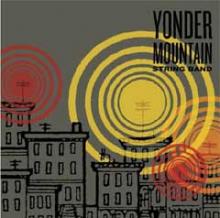
Yonder Mountain String Band CD

ymsb8.jpg
Known for their ability to channel a wide variety of musical idioms through their string-band instrumentation, Yonder Mountain String Band are intent on pushing their own limits. On their new album, simply titled Yonder Mountain String Band, the listener gets to experience just how far these four men have come over the past decade, and how far they're likely to go over the next one. The sky seems the limit for a band with bluegrass instruments and no willingness to play straight-up bluegrass. The acoustic style just happens to be the vehicle they've chosen to haul their myriad influences.
A unique roots reggae influenced and dub heavy band, Dubconscious brings multiple vocalists and a solid jazz guitar to a worldly, ethnic and danceable base. Influences include King Tubby, Lee Perry, Burning Spear, The Abyssinians, Ernest Ranglin, Augustus Pablo, The Gladiators, and The Upsetters to name a few. Their overall goal is to uplift spirits while bringing celebration and social awareness, via music. Dubconscious is striving to be a part of reggae music's evolution, while leaving their own mark on the genre.
Interview by Chris Robie


Jerry Hendelberg - keyboards, melodica, vocals
James Keane - guitar, vocals
Scott Pridgen - tablas, percussion
Matt Woolley - drums, vocals
Adrian Zelski - lead vocals, guitar
Solomon Wright - bass, trumpet, vocals
Roger Levine - hand sonic, Sound


HGMN: What's the music scene like in Athens today? Is this where Dubconscious found its start?

Keane: I don't know, what day is it? We found our start in spirit, or emptiness. In a collective desire to do the right thing, as best our conscience will allow.

Woolley: The scene in Athens today is as it always has been, ever evolving in some progressive sort of way. I feel blessed and excited that it is here that Dubconscious originated.

Hendelberg: The Athens music scene is so unique. There is an amazing amount of musicians and music energy in this town. Dubconscious did start in Athens playing upstairs Tasty World every thursday night in the summer of '02.

Levine: I think that the local publication Flagpole Magazine is indicative of a thriving scene. On any given weekend there are a ton of bands playing and they run the gamut when it comes to genre and popularity. Since Foundry Entertainment has taken up the slack of Jomo Entertainment closing up shop, it seems like Athens is again the place to be if you are into music. The local music is better than any town ive seen, Especially in the folk, bluegrass latin and jazz styles.

Pridgen: The music scene is thriving. I went to a potluck the other day and everyone was a musician that was there. It feels like so many people are expressing themselves through music and with so many different types of people there is something for everyone.

HGMN: How does your new studio release, The American Dream, compare to your previous release, Word of Life?

Zelski: Better equipment, better mics.

Hendelberg: American Dream is definitely very different in that the songs are more evolved and it was done trying to capture the analog feel that the old Jamaican reggae artists had going on. To be honest, I am just very excited about our live Tree Sound Studio recording we did a little over a year ago. It is going to be a two cd set with us showing all of our sides. It sounds so good.

Woolley: The tone or mood of The American Dream is a bit more accessable than that of Word of Life. While still political and spiritual in content, it portrays the beliefs and ideals in a way that may come across as a bit easier to digest. Each album has a sound distinctly its own. Word was recorded digitally and has a very polished and clean sound while Dream was recorded primarily analog which adds a warmer quality to the sound.

Keane: They each stand alone. Each reflects a different moment in the groups evolution. Jay Murphy and Steve Crawford are two pillars of the athens music scene and we are blessed to have worked with either of them, especially to have worked with both of them. I can only hope for future collaborations. The other differences are many, considering we changed studios, recording mediums, producers, and had evolved as artists and people.

Levine: It's a world different, and at first I thought it was a world better, but every once in a while i put Word in the CD player and im always impressed at what producers Jay Murphy and Matt Weiss were able to do with the limited capabilities they had at the time. It's a great album.

Pridgen: I think American Dream was the next step in Dubconscious' evolution. Working with the producer, Steve Crawford, gave it a special flavor and also showed the musical evolution between the two albums. Also, the flow of the album makes so much sense.

HGMN: As a band do you feel that the new album is a huge leap forward from your original sound or do you feel that you guys have become more comfortable writing music and playing together?

Keane: Both, though not necessarily a leap forward, but maybe.

Zelski: Definitely more comfortable writing music and playing music together

Woolley: Well, the new album came out almost a year ago, so it's not exactly new anymore, but yes it was a tremendous leap forward. In all realms, we have been and are continuing to evolve both as individuals and as a collective whole. We will be releasing an album recorded live at Atlanta's Tree Sound Studios this Spring.

Pridgen: Of course I do think we are more comfortable playing together and learning to write better songs, and hopefully each album will be a great step forward in our evolution.

Levine: The guys being comfortable playing music together has always been a huge asset right from the beginning, but every show seems to solidify that bond even more.

Wright: I feel that our music is an evolution of our learning and growing together, musically and as people. We are learning to communicate and express our ideas to each other in positive ways that leads to good song writing.

HGMN: What song do you feel is the Dubconscious fan favorite?

Hendelberg: I can't say there is one favorite, for the band or fan. On a particular night there might be a song that sticks out after the show is over, but for the most part we have so many songs and so many different songwriters that it could really be any song.

Keane: Depending on the night, "Stereotypical" is usually well received, although it feels odd to reference such a song while at the same time generalizing about what fans think. People really seem to dig the Afrobeat we've been experimenting with, too. It feels good to dance.

Woolley: "Stereotypical" seems to stand out in my mind as one that people tend to gravitate toward. The lyrics are simple: "No I don't want to be stereotypical/No I don't want to fit into your stereotype."

Pridgen: The lyrics are very easy to sing along to. It is empowering lyrically for people to sing along to and

can relate to wanting to be individuals and think for themselves.

HGMN: How do you guys feel about the song?

Levine: Its my favorite song too!

Woolley: I love playing the song. It's moving. It makes peope dance. One can easily relate to what the lyrics portray.

Pridgen: Personally, I love the song and am excited about the evolution of "Stereotyical" into "Stereotype," which features some new tasty surprises.

HGMN: What's the band's favorite Dubconscious song?

Pridgen: I don't think I can speak for the whole band because we are all such unique individuals, but that is our beauty that we are all so different and we come together for a common goal, good music.

Zelski: "Stereotypical."

Keane: Usually the newest ones, but songs are like children, and we love them all.

Woolley: Recently we've incorporated in the music our bass player Solomon's breathtaking ability to play the trumpet while our soundman Roger fills in on bass. These new pieces have stepped to the forefront in my mind. Also, a dear friend and vocalist Shelly Olin from Asheville, NC has been travelling along with us and in all respects has become the 7th member of the band. Her addition has proven to be an intregal part of our overall sound. Her voice and message are as powerful as they come.

Wright: There are so many I don't think I could honestly answer that. I wake up every day with a different Dub song in my head. I'd like to feel that we are all constantly inspired! (laughs)

HGMN: What do you guys do on your off nights between gigs away from home?

Wright: We practice a lot. A lot! It's the only way to get progressively better.

Woolley: Usually we don't have too many off nights while on tour. When these rare moments occur, I find myself attempting to immerse in the culture of the area where we are. I enjoy the experience.

Pridgen: Practicing and writing new music is mainly what we do. Explore the towns we are in and learn what each place has to offer, sometimes beaches, sometimes mountains. I think we all love to find beautiful spots and enjoy the earth.

HGMN: Where did the name 'Dubconscious" come from?

Levine: I'll leave that one to the guys.

Wright: That's one for the ages. (laughs)

Hendelberg: A discussion we were having about the subconscious mind and how dub music is our favorite.

Keane: The term 'Dub' was on the table from the beginning, as a reference to the style of music rooted in reggae.

Woolley: Conscious living is a concept each member of the band embraces and we would like to be known as a group of individuals that live up to what we represent. Our name could be understood in terms of an attempt to spread the message of conscious living. We came up with the name one night during one of our first rehearsals way back when.

Pridgen: We were searching for a name and that one came up and we all loved it. Ever since it was mentioned it just seemed perfect.

HGMN: What were other names that you guys came up with?

Woolley: Oh, uh I think we tossed around a couple funny names like Bob Backwards and the Lost Tribe...

Hendelberg: Other names were The Chakras....

Keane: Soon after, the idea of the power of the subconscious mind crossed our minds. Consciousness in general, or awareness, is especially important at this point in time when we are bombarded with so many illusions of reality, morality, and truth. The other names we came up with are hardly worth mentioning, considering the only ones I can remember are awful. Really awful.

HGMN: What makes you write a song?

Zelski: Listening to roots reggae or Fela Kuti, and Afrobeat

Woolley: An innate desire to communicate positivity is what drives me to write a song. I want to move people physically and mentally. I enjoy being a part of an entity that brings people together and promotes positive change. The origin of our music lies somewhere within the hopefully graspable concept of a unifying force that binds all things together.

Keane: Inspiration, in whatever ways it may manifest. Books, conversation, a sunny day, a rainy day, connectivity, isolation, death, birth, life, but especially a good song.

Levine: I usually hear a dope bass line that sparks a similar idea. Then bring that line and maybe one other idea for a skank or a horn line, and let the guys interpret it as they do so well, and develop the song together. It usually takes a few months to evolve.

Pridgen: Inspiration from people and the environment we are in.

Wright: Inspiration. The heart. Everywhere. It's usually presented as an idea that needs cultivating. The more love and effort we put into a song the easier it is for it to realize its full potential.

HGMN: How is it usually presented and where does it go from there?

Pridgen: Its always different, sometimes it is a lyrical concept, sometimes a musical concept, but the real beauty is when a person brings a concept to the band and from there everyone puts there flavor into the song and we watch it evolve.

Woolley: We're trying to experiment with the process of recording the new song first at our studio with just the songs originator, and then presenting the concept to the rest of the band. This helps convey the structure a little better than trying to vocalize the idea. In times past, we just sat down and played the new song acoustically to initially get the idea across and then we would rehearse the song together as a whole.

Hendelberg: A song comes from individual meditation, and then from there the band will take it, mold it, sculpt it, and play it again and again and watch it evolve.

Pridgen: It is presented as a concept and each person adds their creative expression, being conscious of the songwriter's intentions.

HGMN: Who were your biggest influences growing up and has it changed much since you started touring with your own band?

Zelski: Jimi Hendrix, The Police, Pink Floyd, Bob Marley, Beatles. Yes, it has changed. I now listen to roots reggae and afrobeat.

Hendelberg: Definitely has changed over the years, used to be Rush, Jethro Tull, and then heavy metal. Now it is Erik Satie and Dave Brubeck, Lee Perry and Augustus Pablo and the Jacob Fred Jazz Odyssey.

Woolley: Influences are all part of the evolutionary process. My influences have changed over the course of my lifetime both musically and otherwise as the process unfolds.

Keane: Since we started touring I have developed a tremendous respect for any and all musicians. There's certainly more than meets the eye to the lifestyle. My biggest influences were usually people I knew on a personal level. I love artists that recognize the medium they are working with.

Levine: U2, REM, Pink Floyd, Zeppelin...the usual. When i became involved with Dubconscious i became a serious reggae snob and now i can listen to little else without getting bored. Afrobeat has had a huge influence in my life.

Pridgen: Grateful Dead, Burning Spear, Jerry Garcia Band. It has changed through all the wonderful music that has been presented to me through travelling and seeing other bands. I tend to like music with a world influence and danceable rhythms.

Wright: Miles Davis, Prince, old gospel music, and my granddad have always influenced the way I think about music and the way I feel music. I always think about my granddaddy when I play. I'd like to make him proud.

HGMN: What is your favorite album of all time?

Woolley: Too many to list one favorite...

Hendelberg: Favorite album would be pretty much any Dave Brubeck Quartet album from the classic quartet.

Keane: A favorite of all time could never be, everything changes, unless everything stays the same, but then who cares? There are so many greats, many of which I've probably never heard.

Levine: Thievery Corporation - The Richest Man in Babylon.

Pridgen: That is a hard question because different albums have inspired me and that album will be my favorite. I love playing the tablas and for a moment Tabla Beat Science was my favorite.

Wright: My favorite album is Axis: Bold as Love.

Zelski: Thievery Corporation - The Richest Man In Babylon.

HGMN: If you guys could name a key moment leading up to the path where you are today what would that moment be?

Hendelberg: Every moment is huge, but selling out our NYE show in Athens, and our last Smith's Olde Bar show which sold out. Those were great moments because having a full room makes the music take off.

Woolley: The moment we all as individuals within a band realized the potential for creating a better world through music.

Keane: Every moment is the result of the one before and is responsible for the one after. Every moment that creation has decided to flow through us in a compassionate, inspired, and uplifting manner has been key for us.

Levine: The acquisition of our tour bus. Without that we'd be broke and I would be in an institution. I dont know how bands do it without one!

Pridgen: There are many highlights, like opening up for Burning Spear and Antibalas, but continuous gigs to look forward to and performing our best keeps me very inspired.

Wright: When we first started playing together on Foundry St. in Athens. There was no other feeling that came close. I didn't care if we were serious or just played for fun. It felt really good and I wanted more of it. I love Dub.

Zelski: 5 months before the war started, we played a war protest in Centennial Olympic Park in downtown Atlanta and we were only 6 months old as a band. It gave us an idea of how powerful music can be.   

Umphrey's McGee - Safety In Numbers

ump6.jpg
While displaying the precision rock aptitude that is the touchstone of their sound, Umphrey’s McGee’s Safety In Numbers delves into highly personal songwriting and diverse structures. From the foreboding "Believe the Lie" kickstart to the dramatic "Words," the joyous "Women Wine and Song," and the wistful "The Weight Around" ending, this is a showcase of Umphrey's McGee's myriad abilities as well as a highly emotional experience.
Delta Nove, a Long Beach, Calif.-based jazz/world funk band, self-dubbed an "Afro Samba World Funk Experience," derives their name from a metaphor meaning the manifestation of the mind through music.
By Chad Simon


Though the band performs mostly across California and Nevada, Delta Nove are road warriors nonetheless, traveling the country tightly packed inside a small tour van to perform for its devoted hippie fan base. Last year, the band played Xingolati - a three-day jam cruise to Ensenada, Mexico, with 40 other bands, headlined by the Flaming Lips, Medeski Martin & Wood (MMW), Banyan, and G. Love and Special Sauce.

"We did a Brazilian martial arts act during our set and Billy Martin (from MMW) sat in and played with us," described Bobby Easton, Delta Nove's guitarist and one of the band's founding members, among the event's highlights.

Delta Nove began their steady climb in the jamband world in 1999. They have four albums to their credit, with the latest, "Deep in the Compound," a reference to their recording studio, The Compound, based in Signal Hill, Calif. In addition, the band appeared on a Talking Heads tribute album, performing the song "Cross-eyed and Painless."

The band is currently comprised of six players: Easton (a.k.a. "Dr. Fuzzy" presumably because of his long, flowing dreadlocks) on guitar, vocals, and percussion; Rob "Pukey Bear" Covacevich on saxophones, flute, and percussion; Matt Welch (a.k.a. "Viking" because of his long, red hair) on bass and vocals; Heath Bennett on vibes, steel drums, and percussion; John Harrington on trumpet, percussion, and vocals; and Dominic Freedham on drums. Increasingly incorporating an Afro-Brazilian twist to its music through percussion, Delta Nove stamps their signature on a percussive breakdown during every show, in which each band member stops what they're doing and picks up a drum, creating a tribal seance-like atmosphere through a united, world, rhythmic jam.

"When we originally started, we wanted to play funk, jazz, and rock. As we all developed independently and with each other, we brought in the Brazilian and Afro beat elements. It's all pretty much a different twist on funk," said Easton. "We never play the percussive jam the same way twice. It always happens during a different part of the set and we change up the parts. We started doing this as we began to incorporate more and more Brazilian instruments into our music."

Delta Nove participates in an average of around 10 music festivals per year, and that number is steadily increasing, according to Easton. Last year, the band toured throughout the Southern U.S., headed up to New York, and worked their way back West. After that tour, the band stayed local to work on writing and recording new material.

"I wrote the majority of our original music, but it's getting to the point where everyone is contributing," said Easton. "We're trying to form a cohesive balance where we all write together."


Among the band's musical influences include: Parliament, Funkadelic, Frank Zappa, and jazz heavyweights including John Coltrane, Miles Davis, and Thelonius Monk. Delta Nove has shared the stage with bands such as Spearhead, Latin Jazz percussionist Poncho Sanchez, Karl Denson, and Burning Spear.

Following in the path of traditional jazz, Delta Nove assimilates the improvisational element into their music by allowing the players to solo and segueing songs into one another. Describing the feeling of performing in front of a packed house, Easton says, "I just go on auto pilot. It' s a full circle and everyone's having fun. We balance our sound off each other."

Named one of the Top 10 Bands to See in 2005 by Jambase and Road Warriors of the Year by Home Grown Music Network, Delta Nove's new album is unofficially due out this summer. The band plans to promote it through heavy touring, music festivals, including Wakarusa in Lawrence, Kansas, this June and 10,000 Lakes in Minnesota in July, and also airplay on several college radio stations.

One of Delta Nove's previous recordings, the White Album, featured collaborations with guest musicians. "It was a really colorful album," said Easton. The band typically doesn't record compilation albums, the way Pink Floyd, The Who, and others have historically done. Much of the traditional Delta Nove world funk sound with more of a Brazilian twist can be expected from their upcoming release.

The band's future goals include "creating a lot more music," according to Easton. "We went through a lot of changes the past few years with personnel and now we have a stable band and we're feeling really good. We're getting into that creative zone."

Check out the latest on Delta Nove at the band's Web site: www.DNove.com  

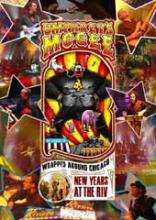
Umphrey's McGee - Wrapped Around Chicago: New Years at the Riv DVD

umpdvd2.jpg
Let’s face it. In this modern indie world where geekfreak is the new cool, Umphrey’s McGee are nowhere near it. Their wholesome, Midwestern good looks and guitarist Brendan Bayliss’s habitually backwards baseball cap place them somewhere between dork and normal on the image scale, and their sense of humor is far too cheeky to pass any hipster litmus test. By traditional rock and roll rules, only the fans are allowed the gratuitous “fuck yeah!” that Brendan Bayliss belts out after the ceiling falls through their New Year’s celebration on Wrapped Around Chicago, and the band’s first set New Year’s suits reach a little too desperately for irony. So if Umphrey’s McGee is so uncool, how does one explain the UM afroman tattoo that practically swallows the shoulder of some young man hamming it up for the camera during the first set?
Having learned their craft from greats like Wayne Krantz, John Pattitucci, and Kim Plainfield, the three members of Cerulean City bring enough talent for endearing melodies to the table that they don't have to set the speakers aflame with blazing solos. Instead, they tick-tock through a group of harmonious compositions that constantly breach the surface of improvisation and leave plenty of space for the listener.

By: Chris Robie

HGMN: How long have you guys been together? Who came up with the name Cerulean City?


SMITH: Cerulean City started about 3 years ago while we were living in New York City. We actually played a few shows under the name "Birth of Mud" before that. We went through a line-up change about a year and a half ago when Kevin O'Brien came in to play bass. When we were living in New York, we were studying at a school called The Collective. One of the songs that we played a lot there was called "Cerulean Blue" by a great jazz vibraphonist named Joe Locke. I really liked that song and thought was kind of indicative of what we were trying to do, so I wanted to call the band "Cerulean." Unfortunately, there is a rock band in LA with that name, so I figured we'd tack on "City" to represent being from NYC. I didn't realize until after we started touring that "Cerulean City" was actually a stage in a very popular Pokemon game. Oops. I figure when all those 10 year olds hit college, we'll be huge...

HGMN: How much time went into making the new album? What's it like compared to the first album?

SMITH: Both albums were made in the same amount of time: 5 days. 2 days to record, 2 days to mix and 1 day to master. Its extremely difficult to make an album that fast, but we figured that its better for us to spend the money on hiring a kick-ass engineer and renting a kick-ass studio than to spend it on months of a mediocre engineer and a crappy studio. This way, if we rehearse like crazy before we go in there, we can just lay it down and let the master go to work. The quality of sound and mix is really important to us and you're not going to get that even with all the time in the world unless you get a great engineer and a solid studio setting. The guy we work with is Joe Ferla, and he is a true master. He's done some landmark recordings, including John Scofield's A Go-Go and Bill Frisell's album with Dave Holland and Elvin Jones. And many many more. We have a great relationship with him and are definitely honored that he would work with us. We were much more prepared for this album compared to the last one. We had a solid idea of what we wanted, the sounds we wanted, the arrangements and the general order and vibe of the album. The first album was really just a learning experience for us. We tried to prepare as best we could for it, but not having a frame of reference we were just not very efficient in there. We spent a month straight rehearsing and writing and concepting for Saturn Return so that we could go into the studio and just have fun and let the engineer go to town on it. I think that came across. The vibe on this album is much more relaxed and flows from one song to the next much better than the first album. I also think we played better and I think the writing was better.

HGMN:
What kind of music are you guys listening to these days?

SMITH: We listen to a lot different stuff. That's one of the benefits of being stuck in a van all the time! We are all huge fans of Wayne Krantz, so he's heavy in our rotation. Lately, we've been listening to more singers and horn players...Mos Def, Fiona Apple, Chris Potter to name a few. When we went into the studio we were listening to the latest Oz Noy album a lot. There is a song on Saturn Return called "Broodwich" that is sort of a nod to Oz.

HGMN: What's the scene like in Ithaca and how do you compare it to other cities you perform in?

SMITH: The scene in Ithaca is starting to come alive again. I think when we moved there, it was a little quiet. I really felt like were scaring people away! But people there are pretty open minded and we seem to have found an audience. One of the things that disappointed me about getting on the road with this band was the total lack of community we found out there. I really thought that we would start playing shows and find like minded bands and people that wanted to be part of a community or scene. We found few friends. It dawned on us at some point that if wanted to feel community, we were going to have to do it ourselves. So, we started trying to work as much as we could with other bands that we like and forge friendships/alliances with these bands. It has taken some time, but I think out of that has risen the beginnings of a new scene in upstate NY. Bands like Oshe, Mountain Mojo Authority, Doja, Triose and others are all bands that we like to work with and are bands that are working hard to create a community for all of us to enjoy. We are very proud to be a part of that.

HGMN: What other talents do you guys have outside of music?

SMITH: Ha! Well, Lars is our diorama artist. So, you'll have to come to our shows and see for yourself if that would be considered a talent or not. Kevin works construction in his spare time, so he is our resident brute. If you are a venue and you don't pay us what you agreed upon...you will meet Kevin. Me? I am the single greatest parallel parker on the planet.

HGMN: When the tour ends, what's the first thing on everyone's agenda?

SMITH: Generally, we just get away from each other. We get along very well, almost too well. But after being stuck in a van with each other for months on end, we all need a little time to decompress. A trio has a very interesting dynamic. There is no such thing as an equal sided argument when you have a trio. It is ALWAYS two against one. So on any given day on a tour, you could be the one that is getting picked on, and there is no rhyme or reason to the daily alliance - when its your day, its your day.

HGMN: Describe your music. Any influences (Past or Present)?

SMITH: We've been using the phrase "Electro Slam Jazz." I don't think that really does it, but describing our music is tough because people who listen to us describe it in so many different ways. We are certainly heavily rooted in funk and jazz. The rhythm section of Kevin and Lars (or "Kevlars" and we like to call them) is just a solid funk/groove unit. We take it out, try some different stuff, throw in some odd meter phrasing, but it all comes back to groove. We've been doing some more trance stuff lately and some more rock stuff too. Wayne Krantz has been a big influence on us. We work hard on trying NOT to sound like him, but even if we wanted to we couldn't. That guy is insane. John Scofield was definitely and influence. We started listening to Photek this past year, getting some ideas for Drum n' Bass and Jungle stuff. We went through a big Garaj Mahal phase. I am a big Steve Kimock fan and Lars loves Rodney Holmes playing in that band, so we have definitely worked through some of their stuff. "Sherbert" on our first album was a nod to Kimock's tune in 6 called "Ice Cream."

HGMN:
Where do you draw inspiration to write music? What motivates you to pick up and write a song?

SMITH: I would say writing is the most difficult thing that we have to do. Any time we try to force a song out, it rarely ends up being something that we all like enough to use. Usually, I will bring in a small idea, maybe one or two short sections, and then we'll work through the rest as a band. It is rare that song comes out that doesn't have everybody's finger print on it somehow. Occasionally we'll pull songs almost entirely from improvisation. In fact the title track on the new album was entirely improvised. We were on a marathon gig in Long Island and we ran out of tunes so Lars kicked in that beat...and the rest is history. Luckily it was recorded. What you hear on the album is almost exactly what you hear on that original tape.

HGMN: What's the craziest thing to happen to you in the past year?

SMITH: Lars is an endless supply of entertaining moments. I don't know what it is about drummers. Probably the the funniest thing that he did in the last year was to actually cut the end of his pinky finger off with a frozen hamburger. He was trying to split two VERY frozen burgers by slamming them against a ceramic sink. He literally lost the end of his finger. I have pictures to prove it.

HGMN: If you wanted to turn someone on to your music, someone who had never heard your music before, which song would you pick and why?

SMITH: At the moment, I would choose "Saturn Return." We work so hard on writing tunes and refining everything we do...and yet that one came out of us just having fun at a show. I think it says something about the direction we are trying to go in and that really we are at our best when we just relax and have fun. It has a nice groove, and is a nice foundation for some fun improvisation. We really try to stretch that one out live. That song is also a totally collaborative effort.
NRPS and their Tour Manager agreed to an informal interview; we talked over brunch the day after their Charleston show. There’s plenty of historical information about NRPS at their official website, NRPS.net, so the interview primarily focused on their latest adventures and future plans.
Interviewer: Jenn A Mahoney

New Riders of the Purple Sage:
(DN) David Nelson - guitar, vocals;
(BC) Buddy Cage - pedal steel guitar, vocals;
(MF) Michael Falzarano - guitar, mandolin, vocals;
(JM) Johnny Markowski - drums, vocals;
(RP) Ronnie Penque - bass, vocals; and
(MT) Mark Topazio - tour manager.

HGMN: One of the things I think that is most exciting about what you guys are doing is that y'all have your own other musical endeavors, but you're getting a chance now to play out with different people and play out different tunes, and that's gotta be really cool, so I'm just wondering how it's going and what you're liking about it?

(BC) I've been a hired gun since I was about 15 years old. I'd take whatever jobs I could take, so it's not like I went and got some other kind of gig or whatever, so there's no one gig, it's like everything together. That included New Riders, that included whatever session work... it was always just freelancing. You gotta be crazy to play the kinda stupid instrument I'm playing...

HGMN: That's not a stupid instrument!

(BC) I mean that in a... well, whatever. We don't need to editorialize my randomization.

(DN) He means it in the best way.

HGMN: Does somebody want to tell me how this incarnation got together?

(MF) That would be Johnny, Johnny will help you out with that.

(JM) Well, we got a call from David Nelson; he was houndin' the sh*t out of us.

(MT) It was really the spark plug, my buddy Johnny Markowski over here, ya know, that put the vision together.

(JM) It happened over a round of golf. It did, really. I was playing golf with Buddy Cage and ah, we talked about making a record with me and Buddy and a couple of friends and I asked who he wanted to get on guitar and he said, how about get David Nelson, and I said, uhm, if you're gonna play out with David Nelson again, let's put my project on the back burner and you ought to play as New Riders of the Purple Sage. That's pretty much how it happened.

HGMN: That's awesome. OK, so what's the most fun thing about the tours and how are the crowds and turnouts?

(RP) Crowds and turnouts are great.

(DN) The crowds and turnouts have been the most fun thing about the tour.

(JM) There ya go... ching!

[band] Ching!

(RP) We get taken out to lunch.

(DN) That's right, yeah.

(JM) It doesn't happen everyday.

(MF)
You know how often that happens?

(DN) Never.

HGMN: All right, I want you guys to know that everybody I've talked to has said that hearing New Riders play out in this incarnation is like "church." That's how they're describing it, like it's a very spiritual, moving experience, like a reckoning, and I think that's really cool, fans are lovin' it, and so I'm wondering what the future holds for you guys? Like, do you have any new songs in the works? Are you planning anything to keep touring?

(RP) We're still embryonic, I mean this is like what, our fifteenth gig so far?

(JM) Let it grow, Let it grow, Let it blossom, Let it flow...

(RP) Like we just popped outta the seed bud and got sun light

(MF) Just taking it as it comes.

(DN) We try to pull out a new tune at least every tour.

HGMN: Well, you know I wanted to ask you about that because some of the tunes are really timeless, you know like Garden of Eden or Last Lonely Eagle... I mean they may have been penned decades ago,

(DN) Yeah, I know...

HGMN:
... but they're timeless and they're still relevant today, so I'm wondering, do you guys have... Is there any one that you really, really love to play out or is there a favorite that you have?

(DN)
Not really a favorite, no, cuz if I picked a favorite, then I'd be cheating all the other ones.

HGMN: OK, fair enough.

(DN)
Yeah, I'd be neglecting the others ones because of my favorite.

(RP) They're like children.

(DN) Yeah, they're like children.

(BC) We got together to do this, Nelson and me were talking on the phone about, oh really, ya know, yeah, it's something to do... but we didn't want to disappoint ourselves in trying to perform these tunes badly. So if we could just get it up, so to speak, pardon the expression, Jenn...

(JM)
What? Get it up? I don't have a problem with it.

HGMN: I don't have a problem with it either.

(BC) OK, then. You know, for the first five dates, these guys booked road gigs pretty much where they live, and if we could, I mean, if he [Nelson] and I could just sit there and smile at the end of it, it'd be OK, because we got into knowing how good that these tunes really are.

(DN) Yeah, we're happy.

(BC) Yeah, we just wanted to make them faithful, you know, present them in a fashion they deserve, that they've earned over the years.

HGMN: And indeed, you guys are doing a great job with that.

(BC)
Well, we're still smiling. It was really fun to do and like you said, they are timeless.

HGMN: I'm curious what was your first instrument and how did you acquire it?

(BC) My first? The one I'm playing right now. I got guitar lessons when I was like eleven. Essentially to keep me off the streets, out of girl's underwear, and that kind of thing. You know, a hobby. Parents think they're doing the right thing. Oh, music lessons... Little do they know... [laughter] but ah, just like every other guy who plays guitar, I wanted to impress the girls, I wanted to be the kid in my class who played his lessons best. Girls notice those things.

HGMN: Yeah, we do...
What about you David, what was your first instrument and do you still have it?

(DN)
A steel guitar when I was about eight. Guy came to my house when I was walking home from school and I see a big black guitar case. I ran into the house, a representative had come from the Guild to the studio. I didn't get it that it was a steel guitar, cuz it was an acoustic guitar, you know, with the nuts and strings and stuff ... but all I saw was that. He was talking to my parents and said, "Would you like to play one of these?" And I was like, "Yeah, yeah, yeah!" [laughter] Next thing I know, he's got it on my lap and I was like, wait a minute, this is not... he puts his thumb picks on and went plink plink plink while I strummed. He held the bar, waved Aloha Oy or something like that, see how the steel feels, I'm going, "Uh-oh," [as in, this could be really good...] and my Mom's going... [Nelson makes a wide-eyed facial expression.] And that was it, I was roped in. I couldn't back out then.

HGMN: Indeed not.

(BC)
I also... the same thing happened to me.

(JM)
Exactly the same thing.

(BC) That was a scam. All those things were. "It seems to me that your son has a certain aptitude for it."

(DN) Yeah...

(BC) And then you start at the introductory class and you walk into it...

(DN) I hated being promoted too, in class, cuz you had to get up with these older kids... and then here comes the little guy, I was like half the size of anybody else in the class. It humiliated me. I'd walk in the room and everybody would look up.

HGMN: Yeah, but look at you now.

(DN) You don't wanna be with bigger kids when you're young, when you're a kid. That's horrible; it's a fate worse than death. And I scammed not learning how to read music. I would watch the teacher, I'd listen to the tune, and I would put little marks on the music. When I saw the 7th fret, instead of 7 fretted slant, I'd put 7 slash 6, then go home and quickly try to remember the tune. Then come back and the teacher got hip to it, he got wise to it after a while, so in front of the whole class he'd say, "What's that note?" And I would go [mocks playing it on the table] "No, I didn't ask you to play it, I wanna know what note it is." Most notes for guitar are below the staff, so think quick, quick, count the alphabet backwards from "E," backwards... C'mon...

HGMN: E-D-C-B-A.

(DN) Very good! Well, I wasn't that fast. I was paralyzed; I just sat there, turned red. He actually used me to scare everybody else. You better keep tuned in, this might happen to you, kid.

HGMN: And what about you, Michael? What was your first instrument? How'd you acquire it?

(MF) My first instrument... well, I wanted to play the guitar, I was about seven or eight years old, and my father took me down to the local music store, and the music teacher there said, well son, you wanna play the guitar? First, ya gotta learn how to play the accordion. [laughter]

(BC) ... arrest this man!

(MF) So there I am, I got the accordion, I spent a year doing this, I was learning the accordion, and finally to make a long story short, years later I was taking lessons from a real guitar teacher and I told him this story and he just started laughing, he goes, I know that guy, he just didn't have any guitars to rent you! [laughter] And that's how it started.

HGMN: And that's how it started... and what about you, Ronnie? What was your first instrument, do you still have it?

(RP) I think it was a six-string guitar; my father bought for me and my two brothers all this band stuff. He bought a drum kit for my younger brother, a guitar for me, and a bass for my brother.

(JM) Like the Jackson 5.

(RP) Yeah, you know the Partridge Family and all that stuff goin' on and ah, I think that was it. And then I wound up playing bass a year later.

HGMN: And you got his bass, like you told me about last night...

(RP) Yeah, yeah, I got it. That was many years later, actually.

HGMN:
Very nice, well you earned it. So what about you, Johnny? What was your...?

(JM) Drums. My brother's drum set; I confiscated it from him. Go to his bedroom and move it politely into my bedroom.

HGMN: But now, am I mistaken or on Last of the Blue Diamond Miners, were you playin' guitar?

(JM) Umm hum. I play guitar, too.

HGMN: Because I didn't see drums credited to you there... OK.

(JM) Yeah, that guy looks just like me. [laughter] Tattoos are a little different.

HGMN: Is there anything anyone wants to share about any upcoming endeavors? Like I noticed that you have a British tour with Banana coming up [Nelson]. That's gonna be exciting.

(DN) Yeah, getting ready to get myself over to London. February 22nd. You should go.

HGMN: I wish I could, because you're gonna be in London on my birthday. I wish I could be there.

(BC) I just got an Email last night from the director of Rock Programming at Sirius Radio. And he had just, funny how these things happen,

(JM) Oh yeah, man...

(BC) Well, funny how these guys, when they get an idea, it's their idea, but anyways, because of some persuasion on my part, you know, he said what we should talk about is doing shows on the road. Well yeah, I thought of it, but it was their idea. Well, I love it when it's their idea. Yeah, I emailed him back that we'll sit down and talk about it. I just finished the JAM Cruise with Toast. Toast got the idea to put me on that thing and do my radio shows from there. And that worked enough for the guy and then he heard the results and he said, "Yeah, this is great." I mean, you got some DJs out there saying, well, you know, Paul Simon had a hit with this in 1967. For fourteen weeks it was number one. Who gives a f**k? What about the kinda stuff that we play? I mean, you guys are part of that show, too.

HGMN: I agree, and I think also, you know, free form broadcasting is so rare these days that you gotta love satellite radio for that.

(BC) It is rare because of the FCC. And with satellite, guess what? No FCC.

HGMN: Exactly, which makes it beautiful, and you have a lot of latitude...

(BC) We figured out the bane of all radio listening over the decades was commercials. Worthless commercials. We figured out how to beat 'em. Just the way we beat the Russians: buy 'em out.

(DN) Yup, buy 'em out.

HGMN: Buy 'em out, and do your own thing ...

(BC) right, so we don't need the commercials.

HGMN:
Does anybody have a favorite memorable musical moment that they might like to share? Anything that stands out to you?

(DN) [laughter]

(BC) Yeah, there were a couple chicks in the club last night. [general concurrment]

HGMN:
Welcome to the South. The guys in the Caboose, they always said that about the South, just something about the water down here. I don't really know what they meant by that, but it worked for them!

(JM)
That's sorta like the pizza dough in New York, something about the water just makes it better.

HGMN: I heard that about the bagels, too. But I was kinda wondering, any one venue, any one crazy moment, anything like that?

(JM) My favorite time was the first gig. Playing the first time with this lineup. You know, having David turn around and just being like "YES!" ... stuff like that and no moments are better than other moments. You know they're just... Like last night was special. We talked after the show and said the audience last night was like the sixth member, and that was really cool about last night [The Pour House; Charleston, SC].

(DN) Yeah they were really cool last night...

(RP) Very much so.

(JM)
...very much right with us the whole show and that was cool.

HGMN:
You guys had the place packed. I've never seen it so crowded in there and I'm not just saying that. You had a really full house and it's a pretty new venue.

(JM)
Oh Alex and Vanessa, more power to 'em. Man, we had us a great time last night. [Alex & Vanessa Harris own Charleston's Poor House; coincidentally, "Vanessa" is also the title of the first track on Stir Fried's Last of the Blue Diamond Miners.]

HGMN: Yeah, they're good folks.

(MT) I'd have to say, Jenn, that I think my favorite moments are the ones coming up with this band as we really hit the festivals this summer and take it out on the road to California and on up to Portland. I'm really looking into swinging into Portland town with these guys; it'll be a fun ride.

HGMN: I wanna be there when you play Portland Woman.


(JM) That'll be so hot!

(BC) I hope we still remember it by then.

HGMN:  Well, you guys played my favorite last night, or one of my favorites. I love, "Rainbow," and I was so happy to hear that. Thank you.

(JM) Michael does a great job, doesn't he?

[band] Yeah, great job, man.

HGMN:
And so, festivals? What can we expect coming up? You guys got some good stuff lined up?

(MT) Jerry's Birthday Bash in August at Sunshine Daydream Campground in Terra Alta, WV. I think our first festival's probably gonna be SmileFest, comin' up, with a lot of friends and family there, the Stir Fried family, hopefully the Tuna family, the David Nelson family, the New Riders family. And we've got some other city festivals, and balloon festivals, and hippie festivals, you know, which I can't let out of the bag yet, but ah, it's gonna be a great festival year.

HGMN: Excellent, I'm sure everyone will look forward to that.

(JM) I wanna fly to Amsterdam and play the World Cannabis Cup.

(BC)
As per Nelson's quote from Garcia last night about if you got into this thing for money, you came to the wrong decision or you made the wrong choice...

(DN)
You're in it for all the wrong reasons.

(BC) All the wrong reasons, yeah. But make no mistake. Any professional musican just wants to make a decent dollar for the amount of work that they do. And a festival is a good way to do that. Talk about a fest situation. It brings in more for the player and costs the audience less overall to be part of it.

HGMN: You get more bang for your buck cuz you get to hear all your favorite bands and have a little mini-vacation. It's great.

(MF) And the artists get to play to more people.

HGMN:
That's nice, and spread it around. Great. Well, what about songwriting? Do you guys have any new songs in the works? Any aspirations for that?

(DN)
Maayy-be. I'm not telling.

HGMN: I know it's a very personal process, but I'm just kinda curious, do you all write songs?

[band] Maaayyy-be. Maybe. Mebbe.

HGMN: So what's that process like for you? Is it different every time? Do the words come first? Does the music come first? Do you have a favorite place or time to do it?

(DN) It's unpredictable.

(MF) It's unpredictable, that's a good way to look at it.

(JM)
You just never know.

(BC) Yeah, you can't make that happen. You can work on it and try to make the song work better, take advantage of what's happening, but you can't plan, " I'm gonna write this song today..."

(RP) No, that doesn't happen. You thank the Song Gods and they show up and someone whispers in your ear to remind you of an event or something like that...

HGMN:
  I really appreciate you guys being so hospitable and lettin' me do this. I'm gonna put this together with basically a review of last night's show, and Timmy... you guys switched up the set lists but that was really cool, and Timmy made sure I had it all straight before I left. And there are some nice shots, too, some very nice shots, so I'll be sharing all of that with all of you. Thank you.    
Pages

Subscribe to Leeway's Home Grown Music Network